Culture
Embracing nature
As biophilic architecture becomes an increasingly mainstream design approach, Christopher DeWolf takes a look at what’s new in this fast-evolving discipline



If an international exposition is a bellwether for the architectural world’s preoccupations and concerns, one word comes to mind at Expo 2025 in Osaka: biophilia. Many of the fair’s national pavilions embrace nature in their designs, with its host country leading the way. Designed by Nikken Sekkei, the Japan Pavilion uses a circular arrangement of cross-laminated timber panels to evoke the cycle of life. It even functions as a kind of living creature, taking waste from the Expo site and converting it to energy through a biogas system.
“Biophilia has gone from a slightly fringe idea to being quite mainstream,” says Richard Hassell, co-founder of Singapore architectural practice WOHA. When he and his partner Wong Mun Summ established the firm in 1994, their desire to bridge the built and natural environments was seen as quirky at best and a liability at worst. “We always faced disbelief from developers that we would propose spending money on these things,” says Hassell. “Now we have clients who have wholeheartedly bought into them. We’ve reached a turning point where we don’t have to fight for them any more.”
But Hassell is the first to admit that biophilia is a nebulous term — and as its popularity as a concept has increased, so has its vulnerability to being reduced to a marketing buzzword rather than a real framework for design. “We’ve heard clients say, ‘Oh, plants on buildings is so five years ago,’” he says. “In this part of the world where [biophilia] has been most enthusiastically adopted, it’s a trend that has maybe entered its boring phase. Which is a bit sad. Because I think it should become one of the pillars of development. It delivers so many benefits. There’s no reason not to do it.”
Biophilia refers to the hypothesis, first articulated by American ecologist Edward O Wilson in his 1984 book Biophilia, that humans are hard-wired to seek connections with nature. Studies have found that having this connection in the built environment can lower blood pressure, reduce stress, improve attentiveness and make us happier and more creative. It can also benefit the natural world by increasing biodiversity, reducing energy consumption and carbon emissions and cleaning polluted air.
Whether biophilic design actually achieves those goals depends entirely on how it’s implemented. “It has to be more than just adding plants,” says MK Leung, director of sustainable design at Hong Kong architecture firm Ronald Lu & Partners (RLP). “There’s a lot of science behind it but we need to quantify the quality.”
The way RLP does this is through a custom script in the parametric design platform Rhinoceros with Grasshopper that evaluates each project from the standpoint of biophilia. “It’s a simple tool,” says Leung. “We map out movement pathways and see how many biophilic elements a user will experience.” That could include anything from views of greenery to natural sounds, scents and sensations. “No matter the approach, we need to be conscious of whether the whole thing is done in a biophilic manner,” says Leung. “It has to be repeated and sustained.”
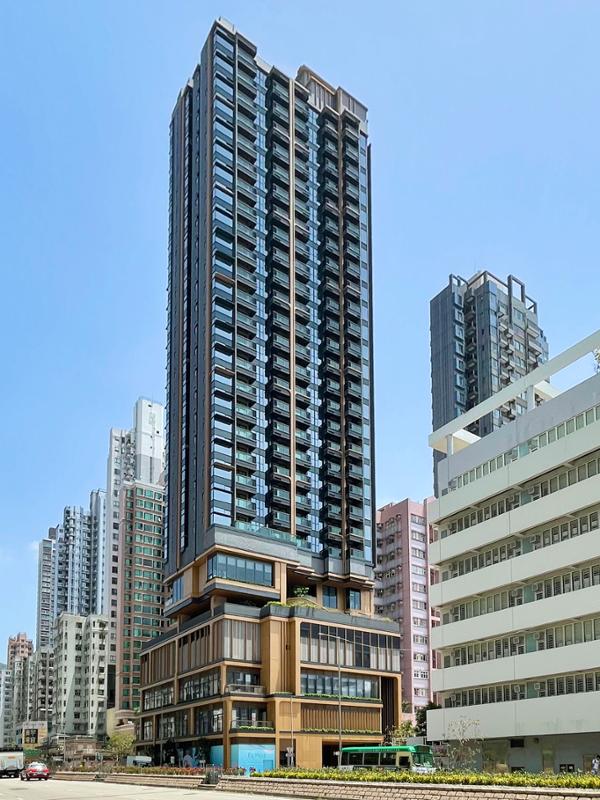
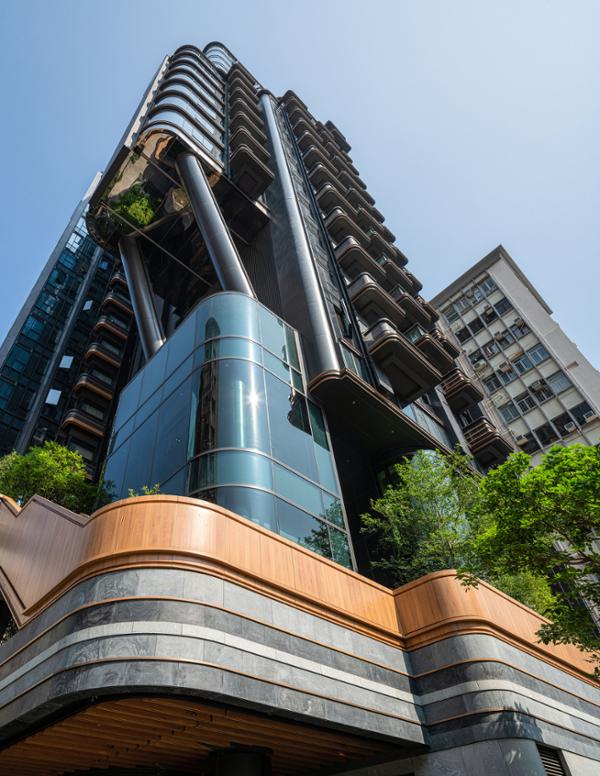
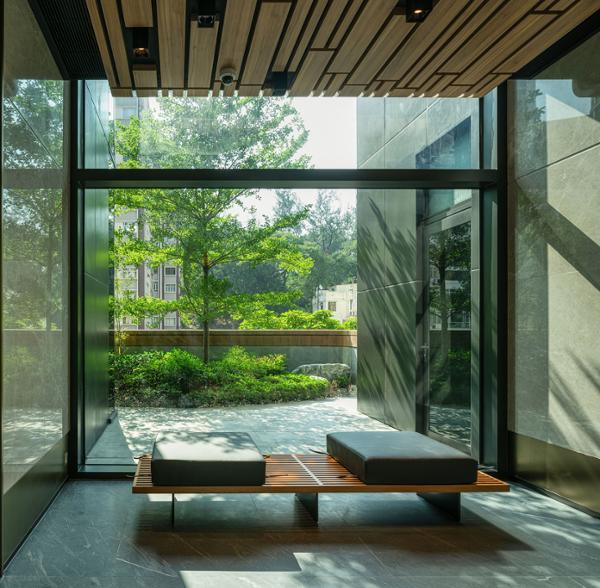
This approach is most obvious in RLP’s Garden Crescent, a residential tower completed in 2023 that features a series of vertically linked gardens and courtyards that managed to bring greenery and natural life into an otherwise tightly packed space. But it has also informed the design of Echo House, a new residential development set in the heart of the West Kowloon Cultural District in Hong Kong, which was built using modular integrated construction techniques; Leung says biophilic principles can help mitigate the manufactured feeling of modular construction. And it will be employed in a new cultural centre, whose design has not yet been officially unveiled, that will be oriented around existing trees.
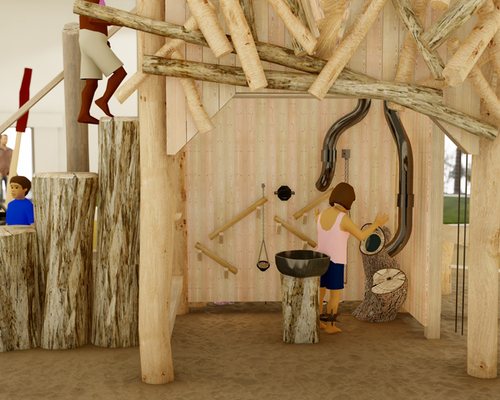
Hong Kong’s rigid building codes and hyper-dense urban landscape make it a difficult environment for biophilic design. And yet the concept has found fertile ground even there. Last year, a local charity unveiled the E-Co Village on a former landfill site with the goal of providing a recreational space for families and school groups where visitors could learn about sustainability. Designed by local firm Axis of Spin (AOS) Architecture, the site offers a campground, farm, butterfly garden, amphitheatre and activity rooms, all of it powered by solar panels that generate a surplus of electricity.
AOS Architecture director Corrin Chan says she wanted to create a space where Hongkongers – normally accustomed to spending their days inside air-conditioned flats, offices and shopping malls – could feel a connection to the natural world. “We followed the sunlight and the wind to orient the buildings,” she says. She explains that she was influenced by a 2021 book, Zen and the Art of Saving the Planet, by Vietnamese monk Thich Nhat Hanh, that advocates biophilia. “We are the environment, not in separation,” she says.
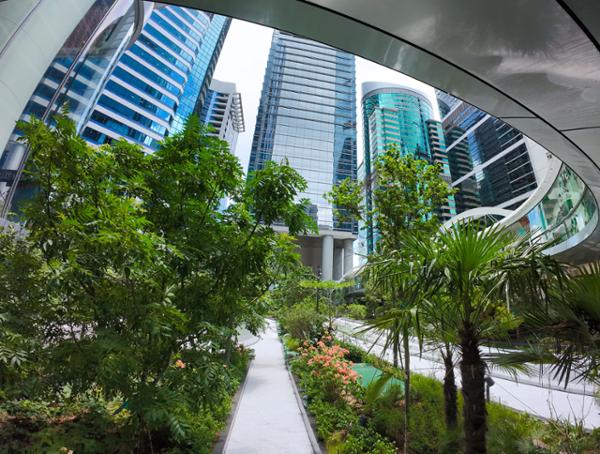
Elsewhere in Hong Kong, one of the city’s largest developers, Swire Properties, recently completed a biophilic redevelopment of its mixed-use Taikoo Place complex, which includes offices, retail and a large venue for art exhibitions and performances. Working with landscape architect Kathryn Gustafson and University of Hong Kong ecologist Billy Hau, Swire added 6,500 square metres of public open space inspired by the centuries-old feng shui woods maintained near many historic Hong Kong villages.
According to Taikoo Place general manager Winsze Chung, the green space not only functions as a public park but also as a way to connect the bird and insect life of nearby mountains with what was previously a glass-and-steel business district. “Biodiversity is the next frontier in combating climate change, and nature plays a crucial role in fostering vibrant and resilient communities,” she says.
Hassell is inclined to agree. “A vertical garden is really just an allocation of a portion of nature, and when we think of how diverse and interesting nature, there are all kinds of possibilities,” he says. “We’re a lot more conscious now about getting consultant advice on how to design not just for biophilia – which is very human centric – but also designing for biodiversity. That biodiversity has a biophilic payoff as well. If your garden is full of butterflies and birds and it feels paradisiacal – it’s much more biophilic than a green garden with no other forms of life in it.”
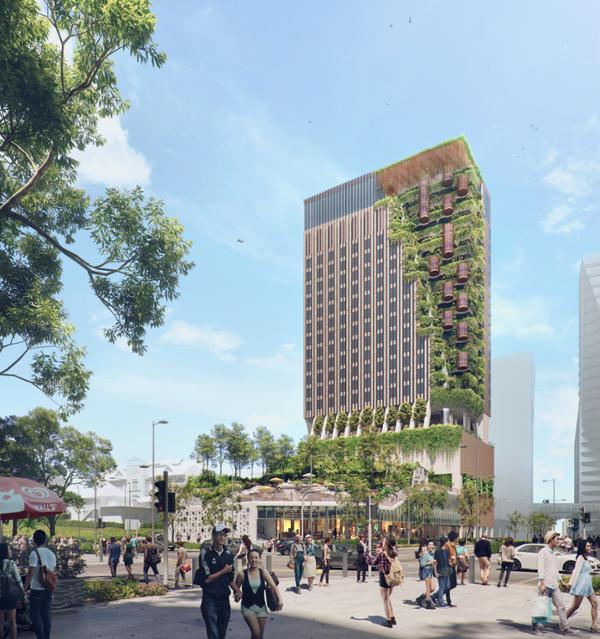
WOHA’s latest projects make an effort to not just create the vertical gardens and other green spaces the firm is known for, but also to think of them as interconnected ecosystems that can enable natural life. One tool they use is a so-called totem that functions both as a sculpture and a home to animals — “like a bee hotel or bird box,” says Hassell. Another is water, which encourages bird and insect life while also providing a humid environment where plants can thrive. One of WOHA’s upcoming projects, Faber House in Singapore, has interconnected vertical gardens linked by a waterfall that flows down 15 storeys of the building. The building will contain a hotel – operated by Hilton under its NoMad brand – as well as commercial and retail.
The waterfall touches on a sensitive question: biophilic design may benefit human wellbeing, but is it environmentally sustainable? “If a biophilic design consumes more energy than a non-biophilic design, it doesn’t make sense,” says Leung. Hassell says there’s a bigger picture to consider. “It’s a very complicated calculation,” he says. “A lot depends on how well it’s been designed. A green wall placed in an unsuitable area that requires frequent replacement of the plants is basically just a slowly dying floral arrangement. But you could also say that if you look at the wellness aspect it might make sense for people, in terms of mental health and air quality.”
Hassell’s goal is for biophilic design to work in harmony with sustainability. “When we talk about it with developers, it’s a mix of things such as addressing urban heat islands, together with mental wellbeing and health – and something like clean air that crosses over between the two.” In his view, biophilic design is the bridge between supporting the natural environment while also encouraging human wellness. “I think all those things have converged,” he says.

"It has to be more than just adding plants,” says MK Leung, director of sustainable design at Hong Kong architecture firm Ronald Lu & Partners (RLP). “There’s a lot of science behind it but we need to quantify the quality.”

AOS’ Corrin Chan designed E-Co Village to connect Hongkongers to nature
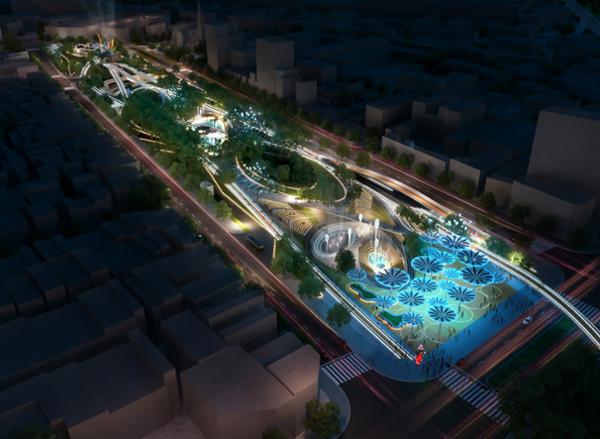
Currently under construction, this revamp of Ho Chi Minh City’s 23 September Park by global design firm LAVA, with landscape architects ASPECT Studio, takes the novel approach of integrating a range of engineered ‘trees’ that collect and recycle rainwater, generate solar power and improve ventilation.
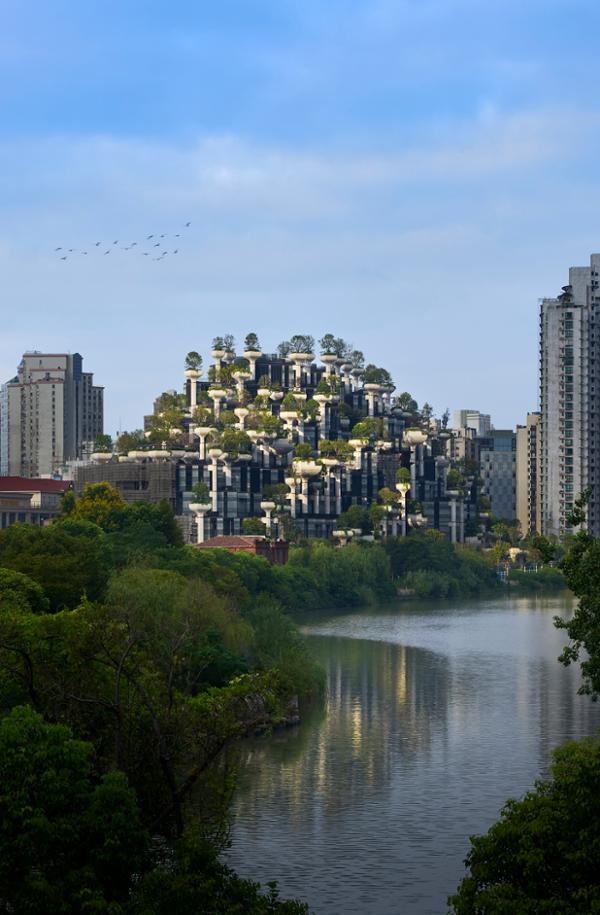
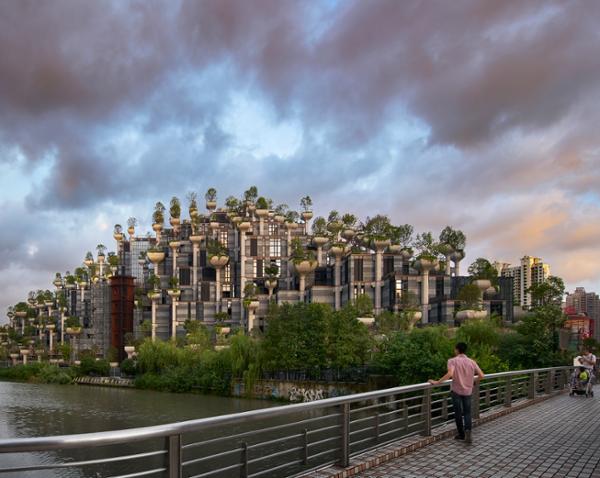
Heatherwick Studio’s mixed-use 1000 Trees project completed its first phase in 2022, with structural columns topped by large planters that give it the appearance of a cliffside forest.
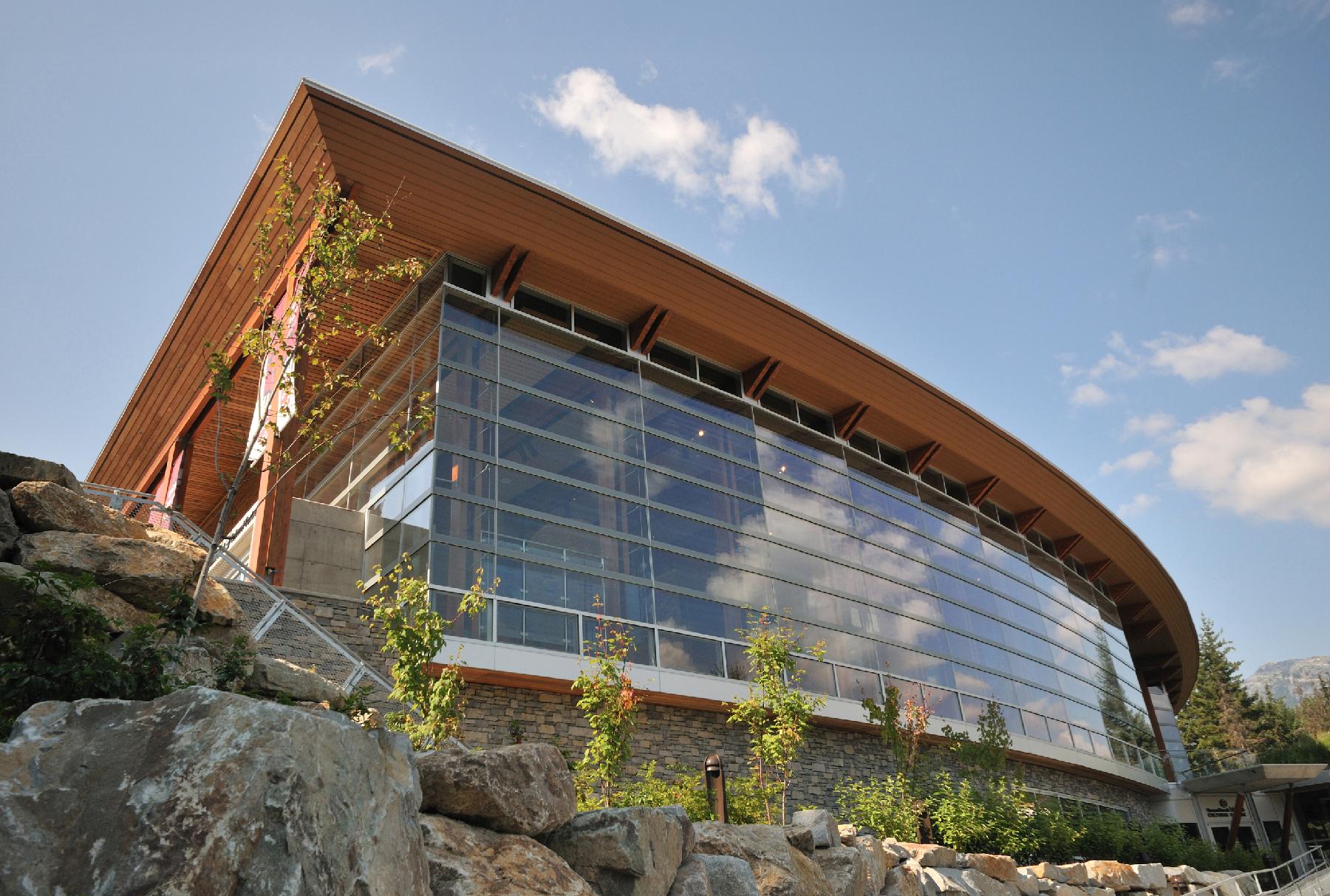
Designed by acclaimed architect Kengo Kuma, this hot springs resort opened in 2022 with a terraced layout inspired by rice fields and freestanding wooden guest suites oriented towards the mountainous landscape.
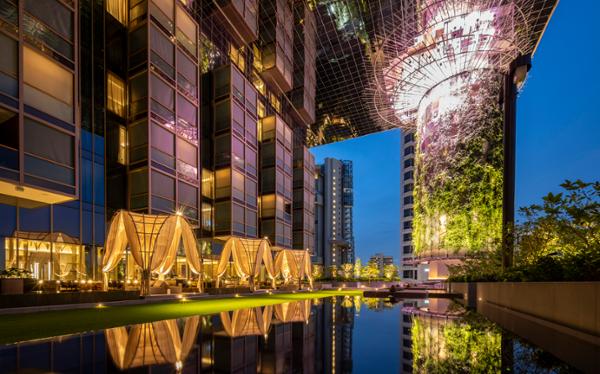
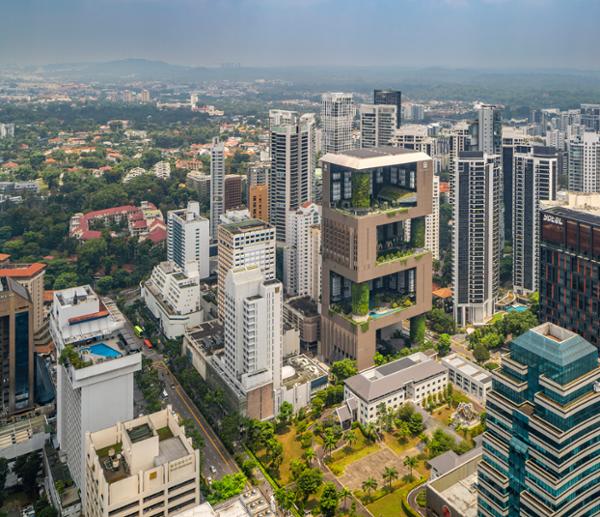
This 23-storey hotel completed in 2023 continues WOHA’s exploration of nature, incorporating lush greenery and open-air spaces in a dense vertical setting. Most spectacular is the pool deck with its vast outdoor volume and mirrored ceiling that reflects the tropical vegetation.