Interview
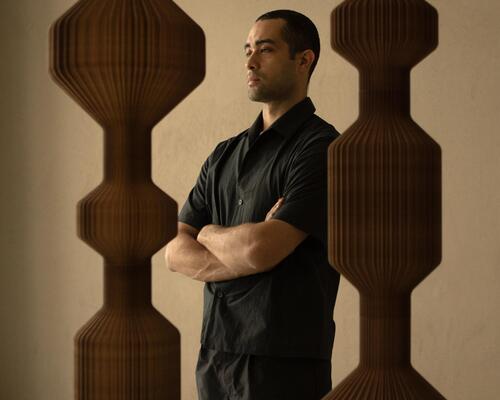
Kengo Kuma
The Tokyo Olympic Stadium architect speaks to Magali Robathan about materials, modernism and the inspirations behind his latest projects



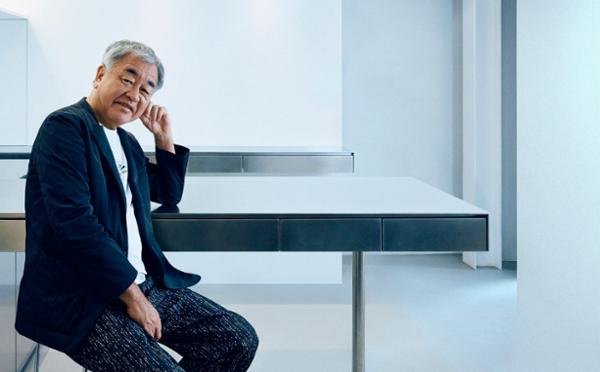
As a young boy, Kengo Kuma envied his friends and their modern concrete homes. Born in 1954 in the city of Yokohama, the young Kuma witnessed huge changes as Japan’s cities were extensively rebuilt following the destruction of WWII.
“I grew up in a small, old wooden house, with rice paper screens and tatami mats on the floor,” Kuma says, speaking to me via Zoom. “It was very different from my friends’ houses. Japan was changing a lot, and many houses were being built from new materials. In the beginning I didn’t like my house at all.”
Kuma’s appetite for the new was wetted further when his father took him to visit the Yoyogi National Gymnasium in Tokyo, designed for the 1964 Olympics by Kenzo Tange. Kuma was awed by this example of Japanese modernism.
“I was so impressed by that building, even at the age of 10, that I immediately decided to become an architect,” he tells me.
While Kuma’s desire to design buildings grew stronger as the years passed, his attitude towards his home and the natural materials and building traditions it represented began to shift.
“Slowly I began to think that my house was better than my friends’ houses,” he says. “It was very intimate. Every material was hand-made. It had a unique smell from the wood and the tatami. Special shadows existed in my house. You know Tanizaki’s book In Praise of Shadows? [1933 extended essay on traditional Japanese aesthetics]. Those kind of shadows existed in my home. I still think about the beauty of that house.”
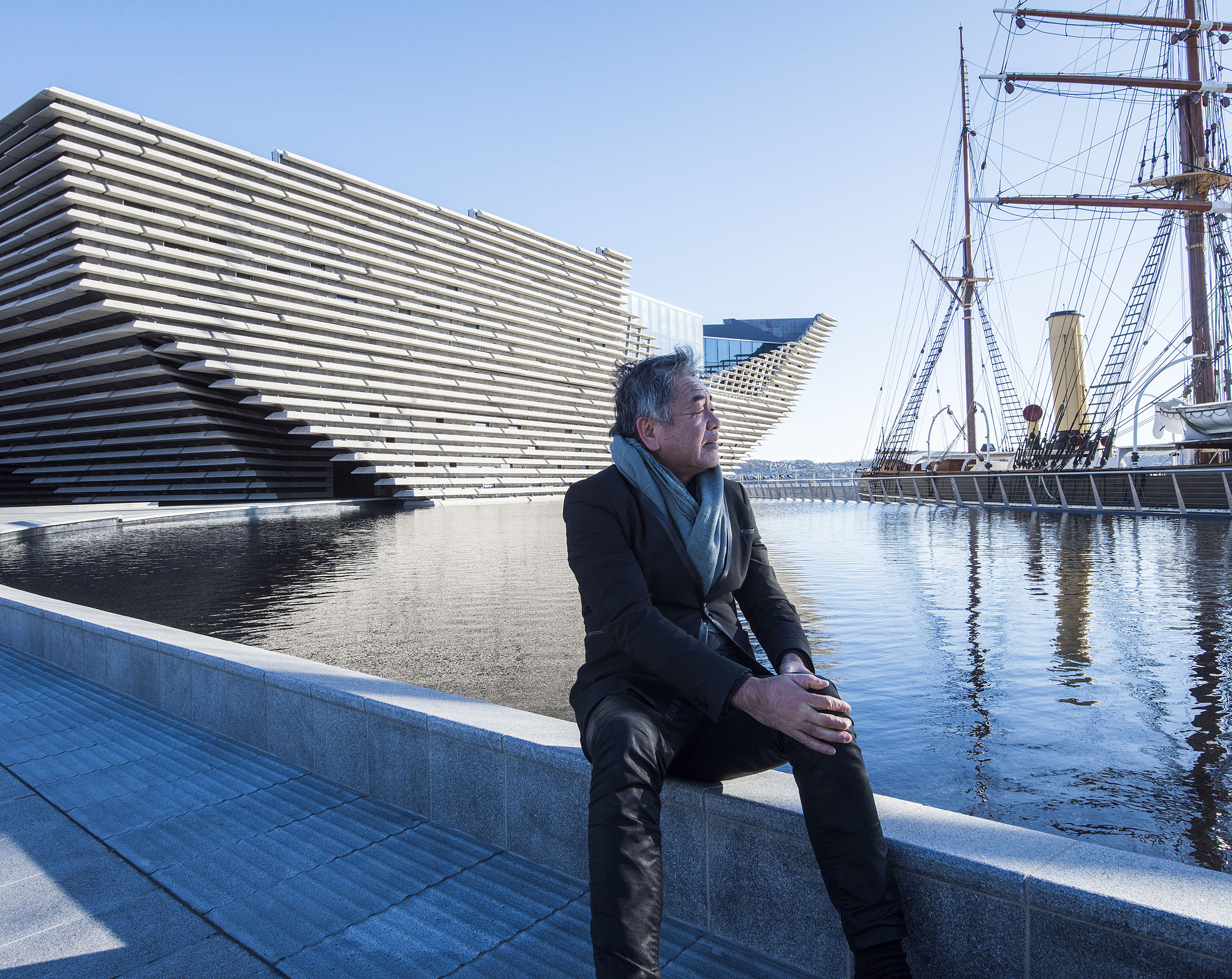
Today, Kuma’s architectural philosophy owes a great deal to his belated appreciation of his childhood home, with its emphasis on craftsmanship and natural materials that reflect the environment and culture in which they sit. It is a philosophy that has led to the creation of numerous iconic buildings across the world, ranging from the wooden, plant-filled Japan National Stadium in Tokyo to the dramatic stone-clad V&A Dundee, designed to evoke the rugged beauty of Scotland’s granite cliffs.
“I want to give the experience I had with my first home to my clients and my friends – that’s my basic desire,” Kuma says. “The basis of my philosophy is harmony – harmony with the environment, with history, and with the traditions of a place.”
I speak to him from Nairobi, where he is working on a hotel project in neighbouring Tanzania. This is one of a host of diverse projects being developed across the world by his firm, Kengo Kuma & Associates. These include the World Heritage and Pyrénées National Park House in Gavarnie, France; Lake Biwa New Culture Center, Japan; Mehrin Moravian Jewish Museum, Brno, Czech; Kannabiyama Observatory, Kyoto, Japan; and Tokyo Tower, Tokyo, Japan.
Finding the spirit of a place
While his projects are very diverse, Kuma always approaches them in the same way, he tells me.
“Whenever I start a new project, I visit the site and walk around it,” he says. “I try to feel the breeze of the place and the smell of the soil. I want to spend the whole day there – it’s especially important to be there in the evening. It’s important to feel the spirit of the place – that’s the beginning of my design.”
Once Kuma has a visceral, felt understanding of the site, he searches for the most suitable materials for each project.
“The most important thing for architecture is to find the material that can be the friend to us,” he says. “Every project starts with us trying to find the protagonist material for that place.”
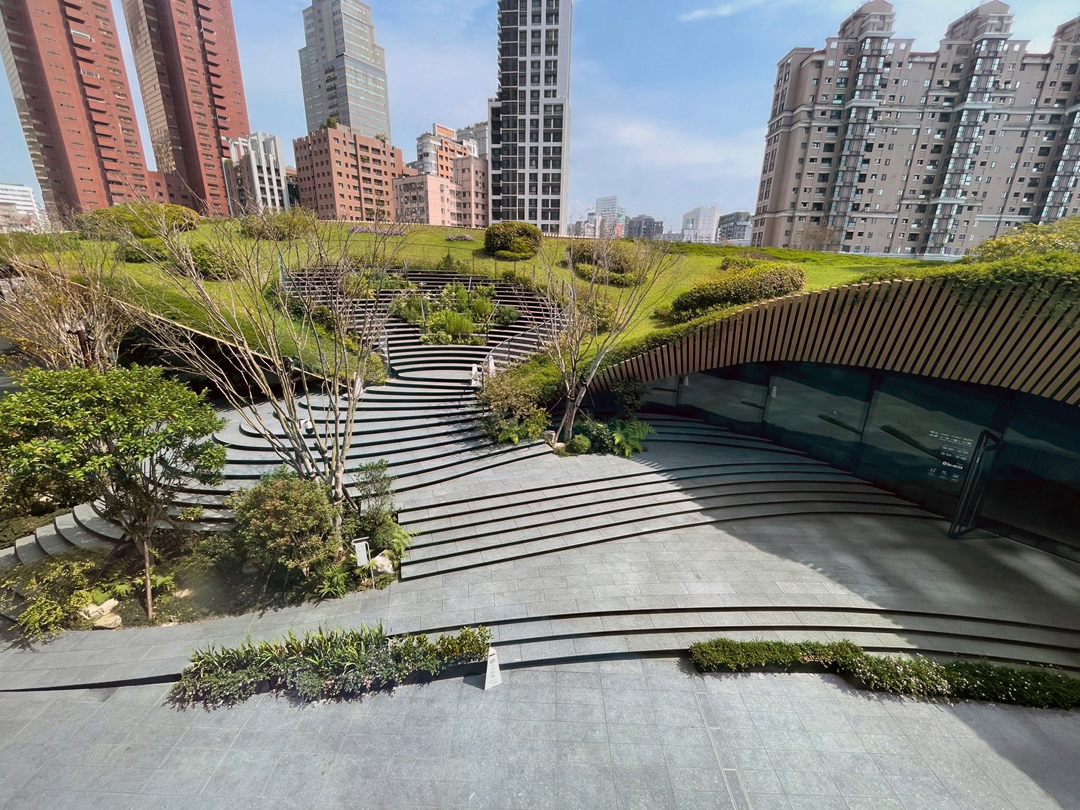
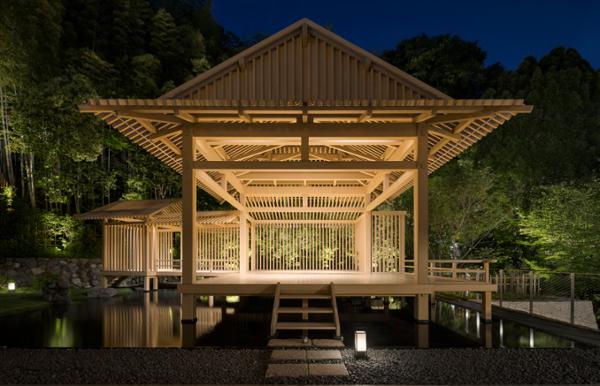
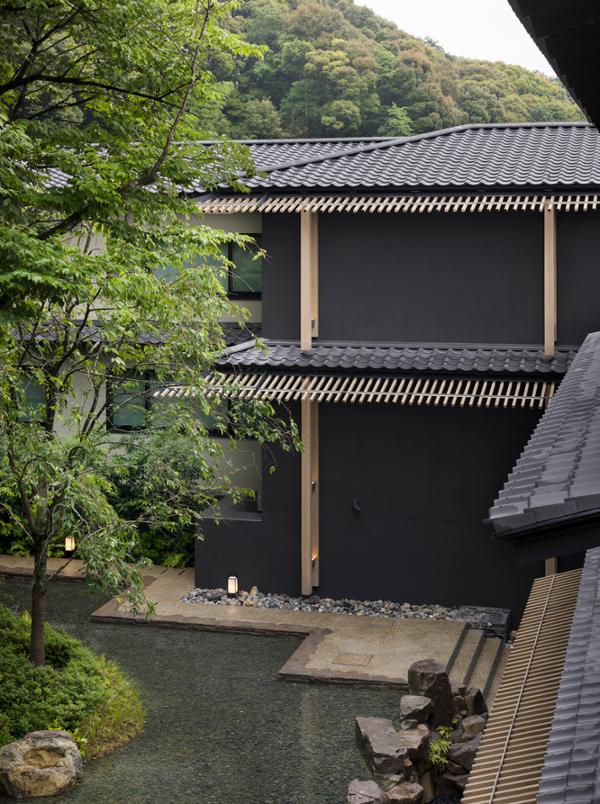
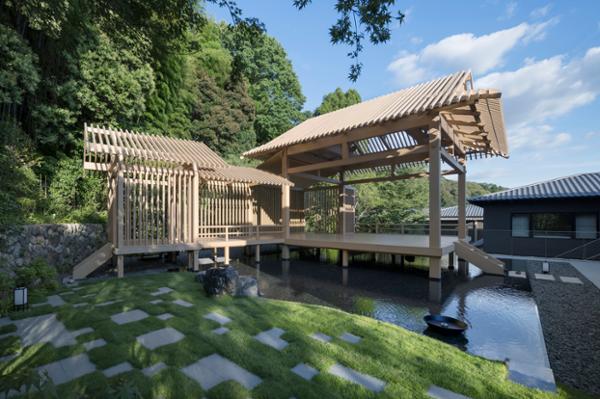
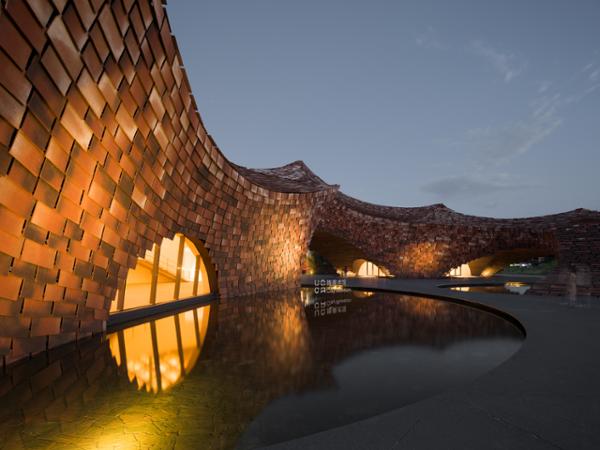
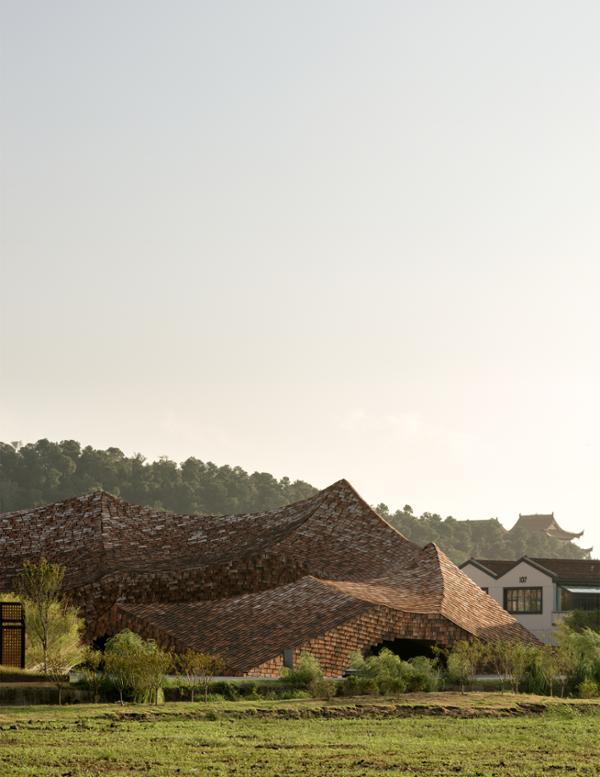
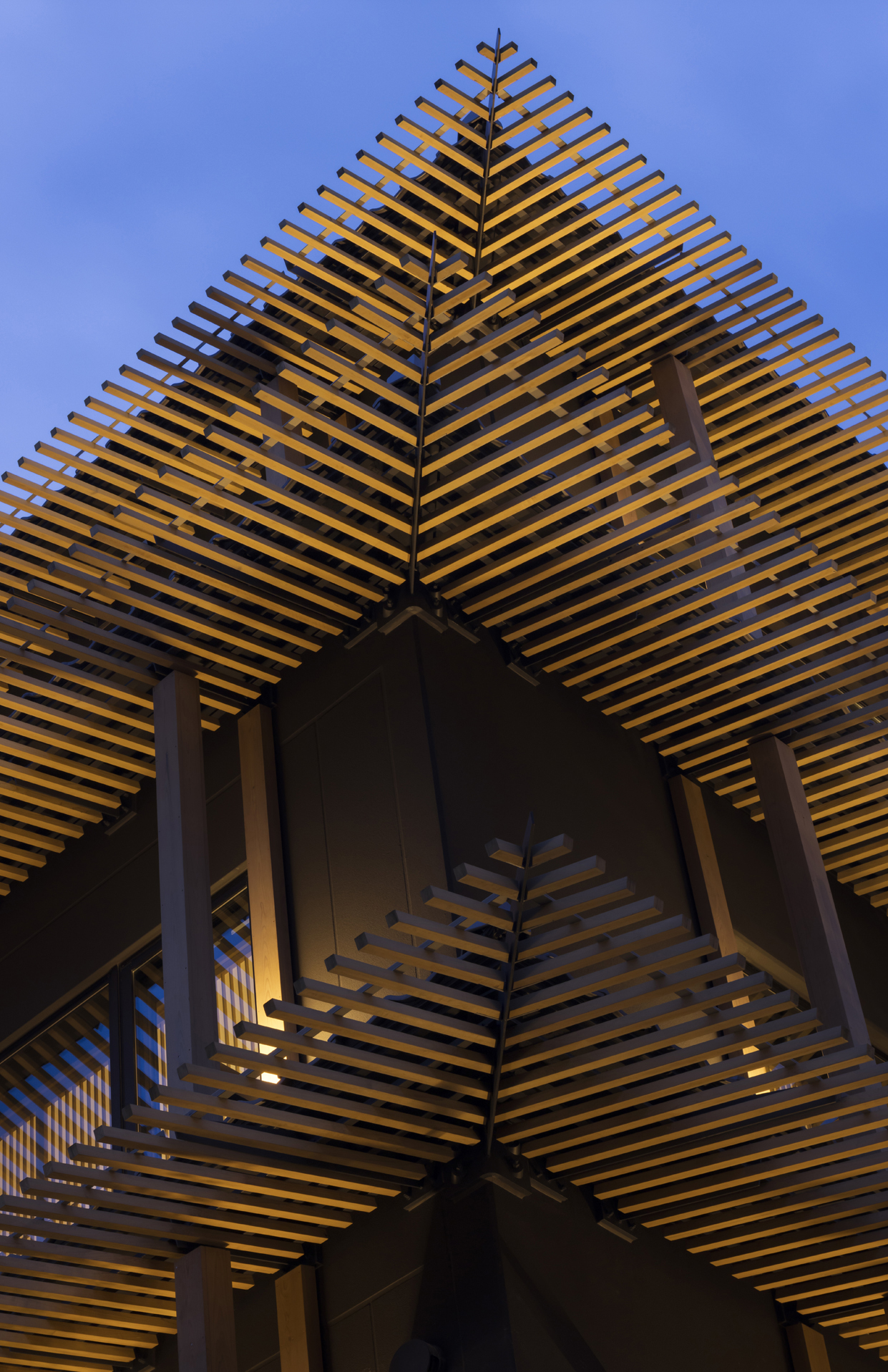
Recent projects highlight the results of this approach, from the UCCA Clay Museum in Yixing, China – which features a peaked form clad in handmade ceramic tiles designed to celebrate the rich heritage of the area’s pottery culture – to the newly-opened CMP Inspiration museum in Taichung, Taiwan, with its green-planted roof-come-garden that wraps around the partially buried exhibition galleries. In Kyoto, Japan, Kuma used the ethereal beauty of traditional Japanese Noh theatre as inspiration for the Banyan Tree Higashiyama Kyoto, which features a dedicated outdoor stage made for Noh theatre from yellow cedar and Kyoto cypress.
Bringing back thatch
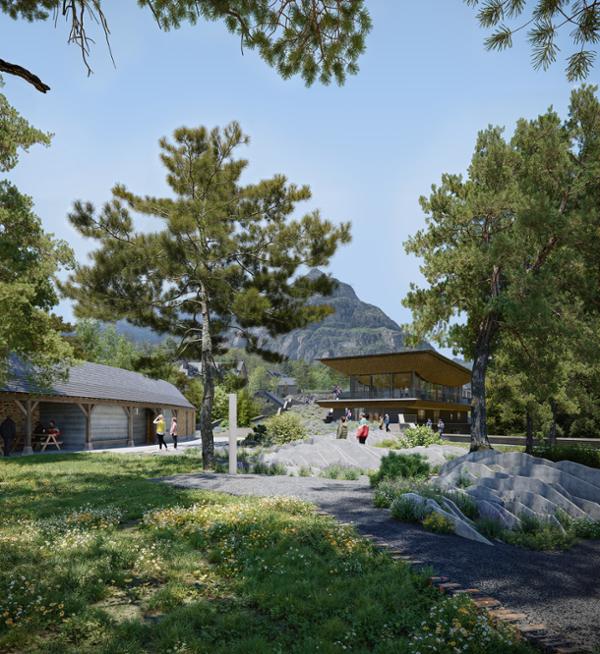
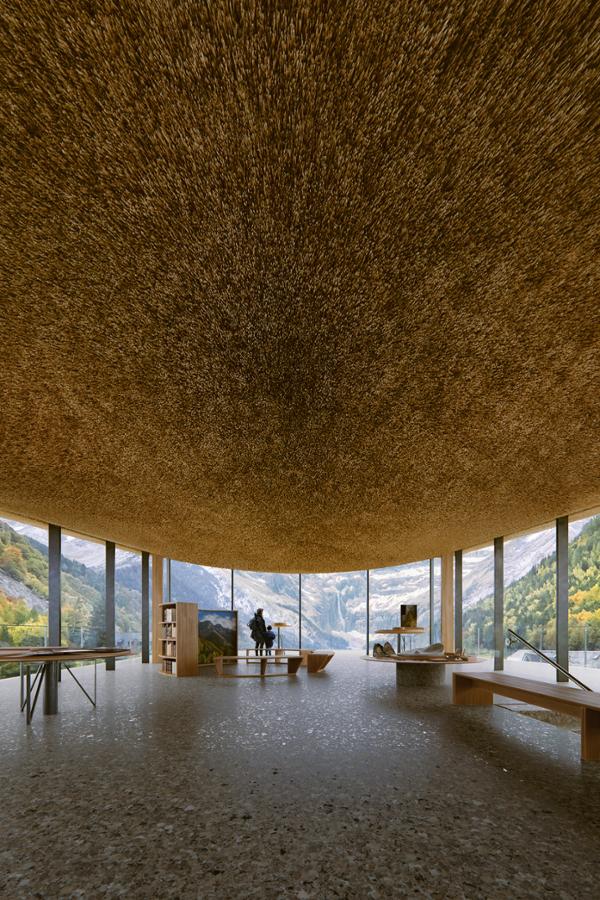
In the south of France, Kengo Kuma & Associates were tasked with designing a visitor centre that would help visitors and locals appreciate the stunning natural beauty of the Gavarnie Cirque, a large, natural amphitheatre in the heart of the Pyrénées National Park.
“The Gavernie site is amazing,” Kuma tells me. “The topography is the basis of the beauty of that landscape. I wanted to create harmony with that beautiful place by using traditional materials.”
The form of the World Heritage and Pyrénées National Park House is simple and fluid; it has glazed walls to allow views of the mountains, and is surrounded by a new public space with landscaped steps. The main feature of the building is its roof, which features an underside of thatch, celebrating the local tradition of haymaking.
“In the mountains of Europe, and in Japan, thatch has traditionally been a major building material for houses, but it has almost completely disappeared,” says Kuma. “I want to bring back the beauty of thatch – the materiality and smell of it – to contemporary buildings. It’s not easy. We’re fighting with the contractors, and it’s a big fight.”
Kuma has long advocated for the sustainable properties of thatch, often using it in unconventional ways such as in the Yusuhara Marche produce market and boutique hotel complex in Yusuhara, Japan, where thatched sections were used for the exterior walls, and the environmentally-focused visitor centre Greenable Hiruzen in Okayama, Japan, which features an upside down thatched roof (with local pampas grass used on the underside so that it is protected from the elements).
A space of conversation
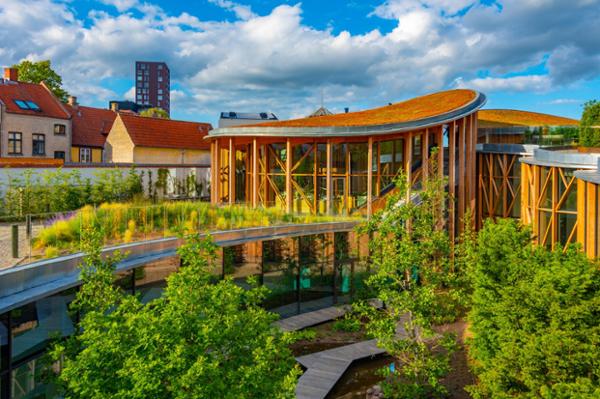
Kuma has designed more than 70 museums around the world, including – as mentioned – the V&A Dundee in Scotland, UK; the Hans Christian Andersen Museum in Odense, Denmark; and the Suntory Museum of Art in Tokyo, Japan.
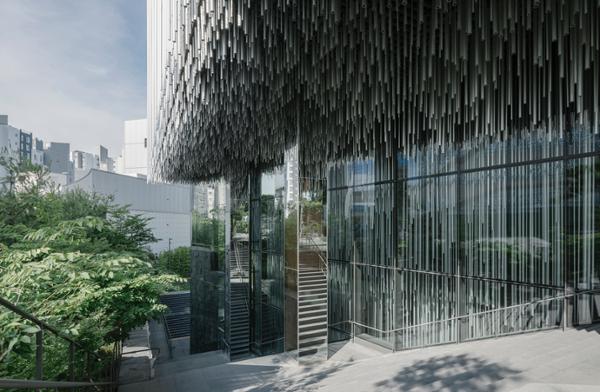
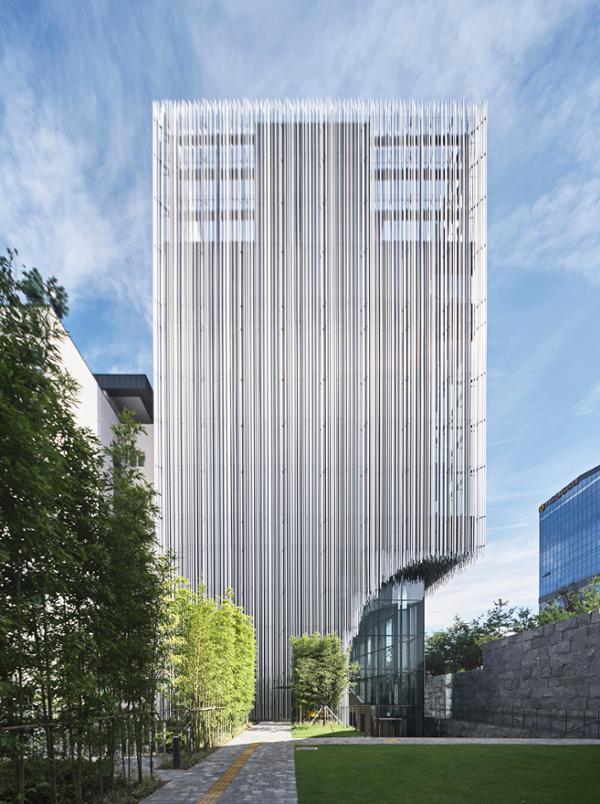
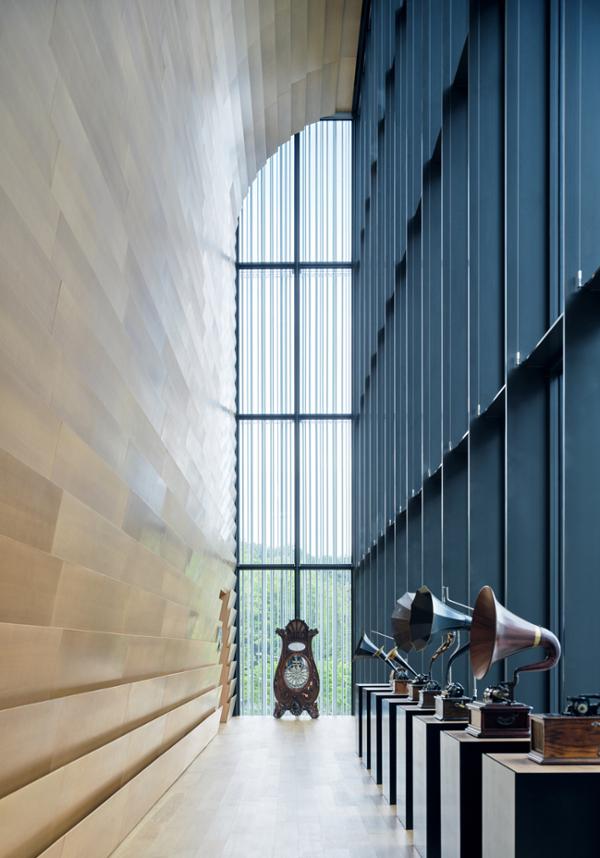
Over the past year, Kengo Kuma & Associates’ projects have included the CMP Inspiration art museum in Taichung,Taiwan; the Audeum audio museum in Seoul, South Korea; and Centro de Arte Moderna in Lisbon, Portugal.
“Museums in the 20th century were considered spaces for art,” Kuma says. “My definition is different. For me, a museum is a place of conversation – conversation with art, with space, with the gardens. That’s the basis of a museum. Art is part of the museum, but it is not the whole experience.
“The most important aspect of the museum is a sense of intimacy, and that kind of intimacy is what we need in the city. When I visit a good museum, it feels like I am coming home.”
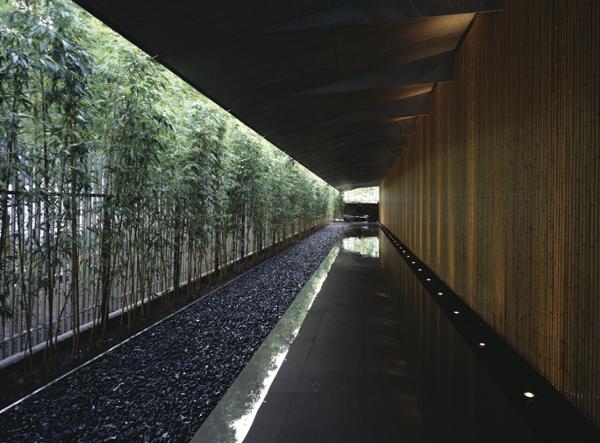
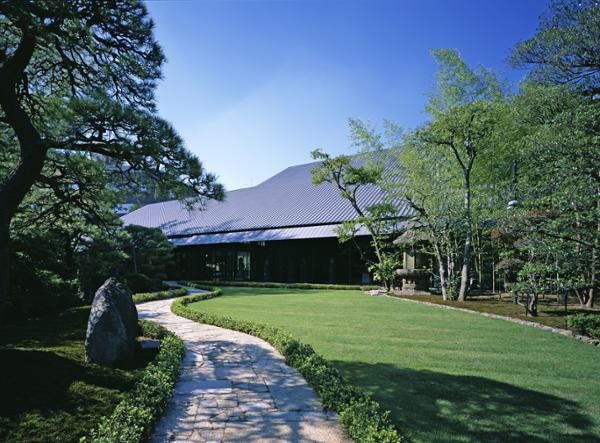
When I ask if he has a favourite museum, he chooses a project that actually started life as a home – the Nezu Museum in Tokyo. Based on the site of the private residence of Japanese industrialist Nezu Kaichiro, who built the original museum to house his private art collection, Kuma’s new museum opened in 2009. With this project, Kuma aimed to better integrate the building with its surroundings, while creating a spiritual art space that would provide a respite from the city.
“I really enjoy the relationship between the building and the gardens in that museum,” says Kuma. “Mr Nezu designed the garden himself, and now it is keeping his spirit and lifestyle alive.
“The museum is a tender, intimate space with a soft atmosphere. My favourite place in that museum is the small café, which is where Mr Nezu had his living room.”
In it for the long term
It is a challenging time for architecture, Kuma tells me.
“The cost of projects is a huge challenge,” he says. “As a result of the COVID-19 pandemic, the Ukraine War and other international conflicts, the cost of materials and energy has gone up tremendously. Some people have begun to think that architecture is just a waste of money.”
The answer, he believes, is to think longer term. “Architecture is not just for our generation, it’s for future generations as well,” he says. “We must leave treasures for those future generations.”
As for the future, Kuma believes we should look to the past, to the simplicity, natural materials and craftsmanship of his childhood home.
“I would like to see architecture going back to nature, natural materials and craftsmanship,” he says. “Craftsmen are the basis of community, and collaboration with craftsmen is the basis of the economy, but in the 20th century, that kind of relationship was destroyed by contemporary capitalism. I want to go back to the situation before that kind of capitalism.
“I want to be remembered as the architect who changed concrete to natural materials.”
I love the work of Geoffrey Bawa. His designs are really amazing, and he gave me many hints about the relationship between gardens and architecture.
It’s a very difficult question. Every project is like my child, and I love all of my children. If I had to choose one, I would choose the Bamboo House private residence and hotel project in China. It is located very close to the Great Wall of China, and I wanted to create something very different. I enjoy the contrast of the small, light, transparent Bamboo House with the big, heavy Great Wall.
I like to visit Japan’s onsens and ryokans. For me, hot springs are not just about relaxation. They help me to come up with my designs. I find that the hot waters and the special smells bring me to another dimension.
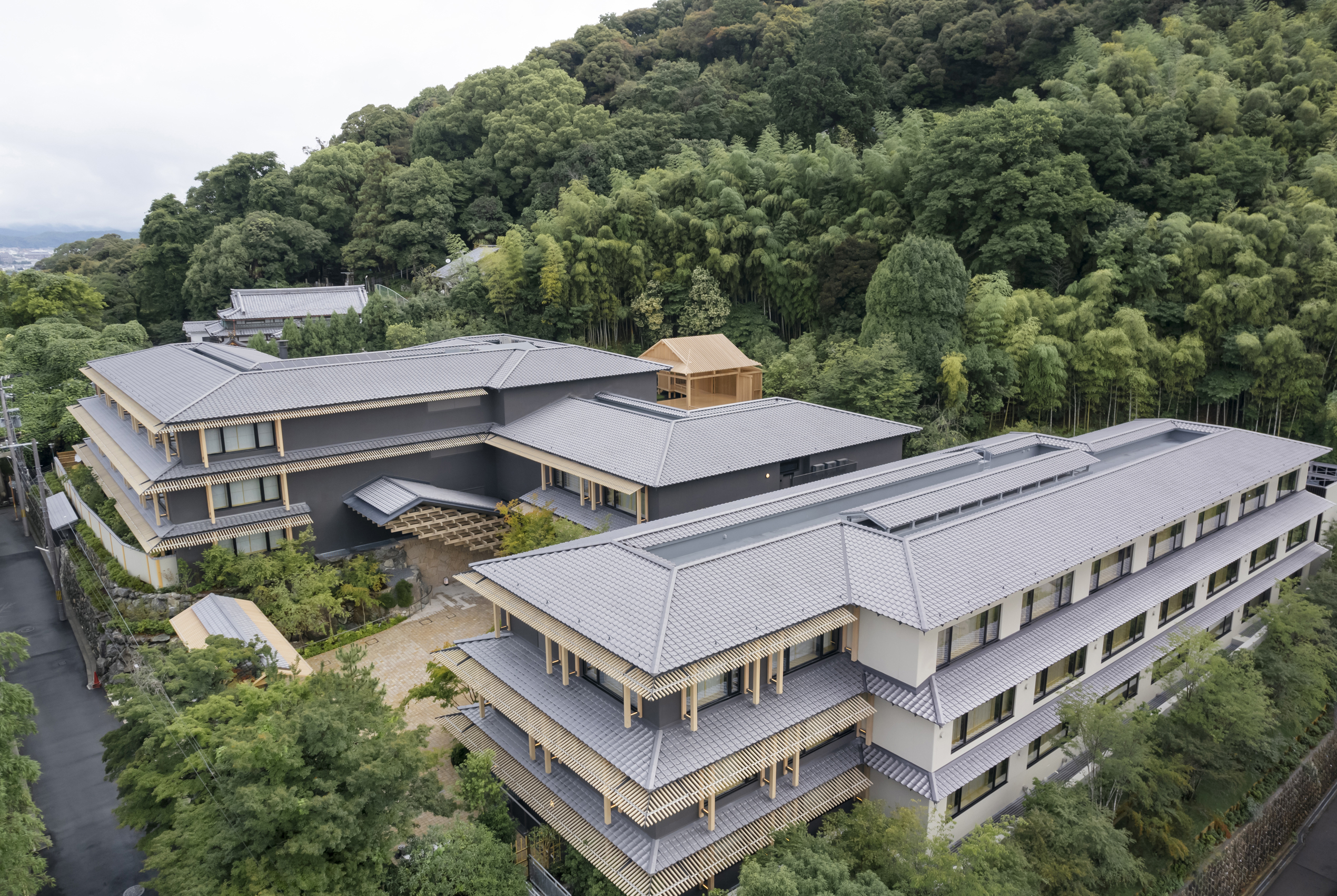
Set in the foothills of Tokyo’s Higashiyama mountains, Kengo Kuma’s aim with the design of this new hotel was to create a sanctuary away from daily life where guests can find peace and spiritual renewal. Designed with a lightness of touch that helps it to blend in with the beautiful natural surroundings, the hotel comprises a four-storey structure built with slatted timber, which houses the common areas and most of the guestrooms, and a three-storey annexe for extra guests.
The hotel also features a dedicated stage for Noh theatre, built from yellow cedar and Kyoto cypress, and hidden in its stepped gardens
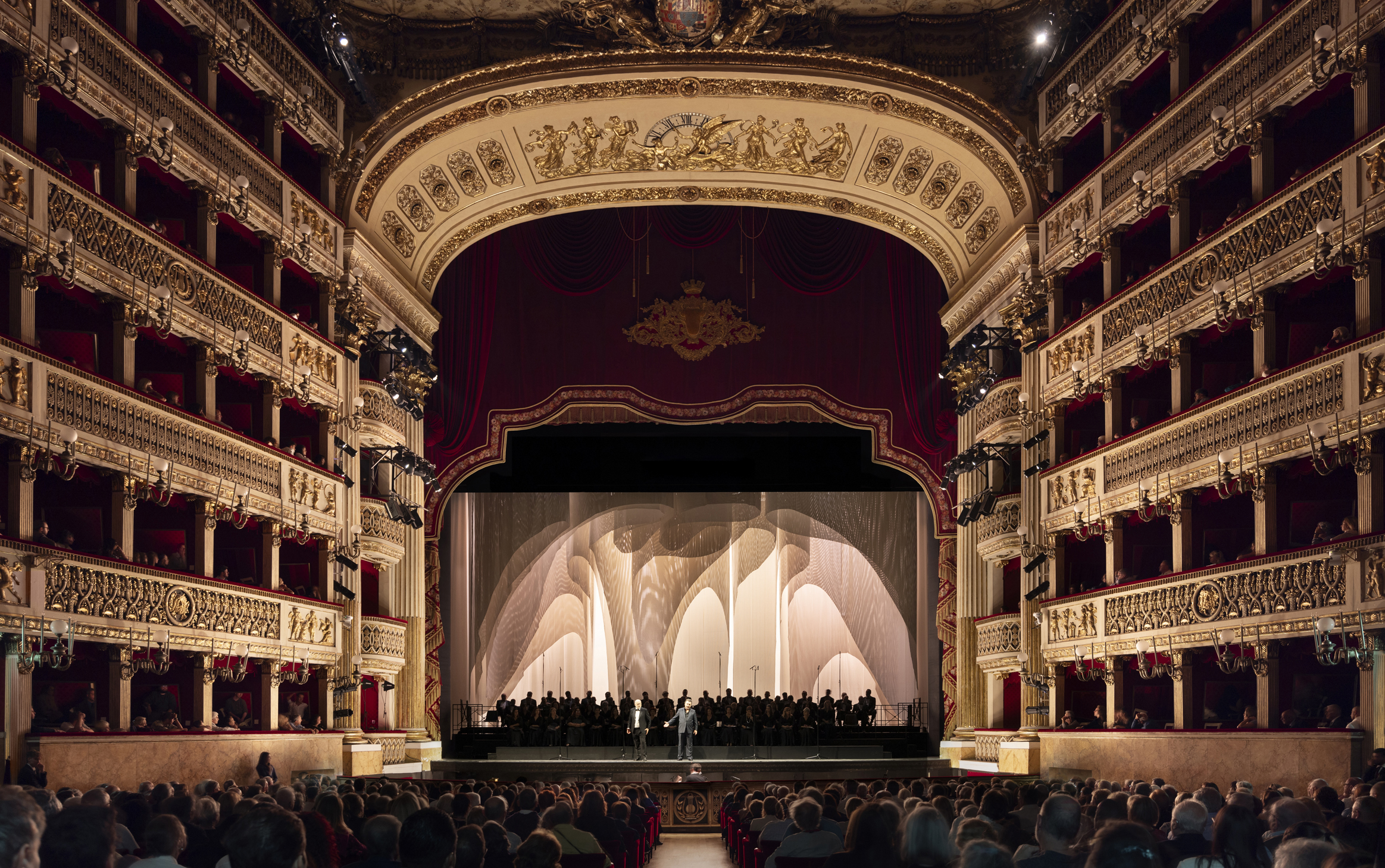
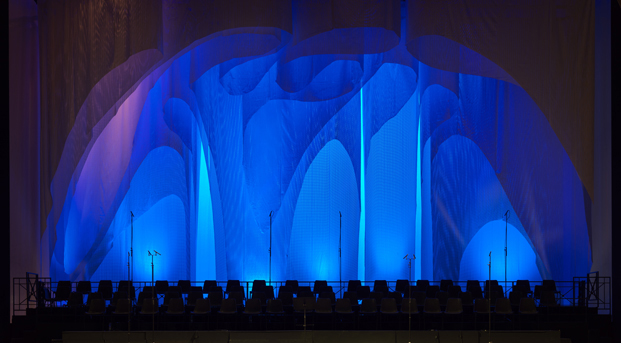
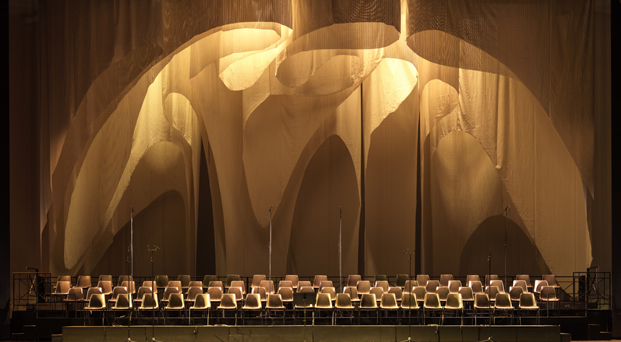
Kengo Kuma & Associates created the backdrop for Giuseppe Verdi’s opera Simon Boccanegra at the Teatro di San Carlo in Naples, which premiered in October 2024.
The stage was set with swathes of fabric hung from above, aiming to capture the atmosphere of the sea of Genoa where the story unfolds, the changing emotions of the characters, and the movement of light on the stage.
The cloth set is composed of special fabric with countless holes made of recycled polyester designed by Kuma and developed by Italian textile manufacturer Alcantara. This unique material has a transparency and matte texture that dynamically changes its expression depending on the lighting, and even has the effect of changing the depth of the space. The pattern of the fabric hanging was based on differential growth, an algorithm commonly found in nature.
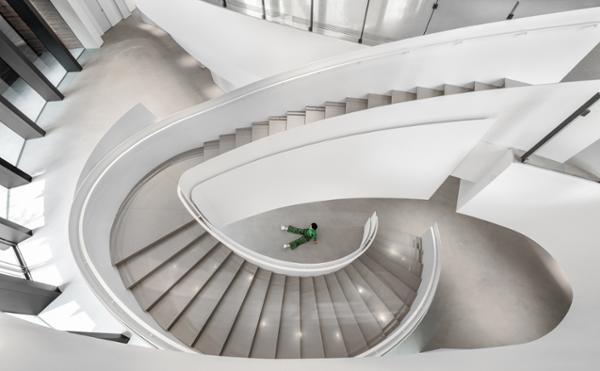
This project saw Kengo Kuma & Associates design a garden-like museum at the foot of a high-rise building in Taichung.
Connecting the underground exhibition space with the ground level, the architects created a shadowy cave-like space with a louvered ceiling that reflects the twisted shape of the roof, pleated walls, and spiral staircase. By creating an organic exhibition space that differs from an abstract white cube, they attempted to immerse nature into the city, both in terms of scenery and experience.