Movers & Shakers
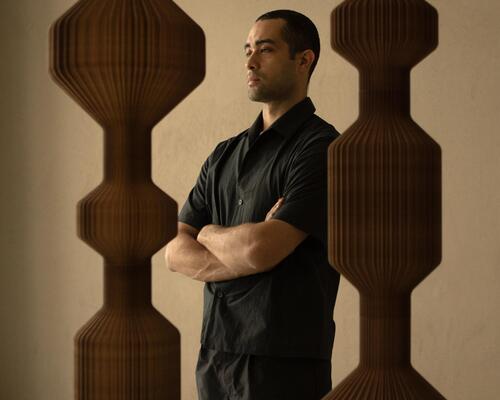
Jean-Michel Gathy
The founder of Denniston International, widely considered to be a living legend in the world of hotel design, explains why there’s no place for prima donnas in leisure architecture



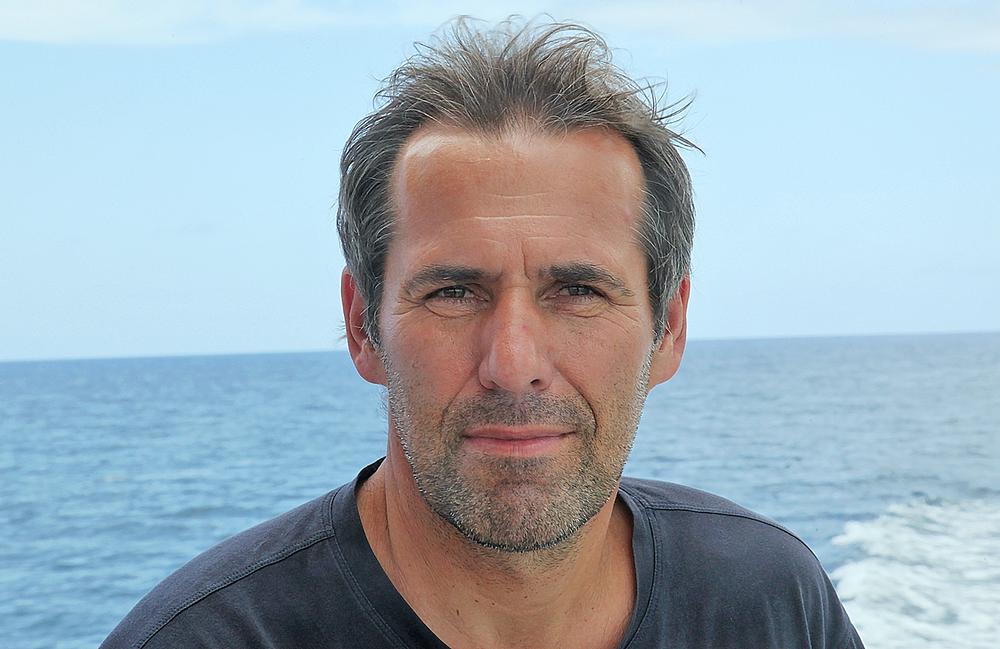
With more than 30 years of experience in hotel design, Jean-Michel Gathy’s reputation goes before him. Since founding his Asia-based architectural practice, Denniston International, in 1983, the Belgian national has amassed a client list that reads like a ‘Who’s Who’ of the luxury hospitality industry. Amanresorts, Park Hyatt, St. Regis, Cheval Blanc, Armani, Mandarin Oriental, GHM, Banyan Tree, Shangri-La, One&Only, Fairmont Raffles, Jumeirah… Denniston has worked with them all. With a clear niche at the top-end of the market, Gathy won’t consider partnering anyone but the best, but denies this is arrogance. Designing a Toyota is just as demanding as designing a Bentley, he says – he just prefers Bentleys.
Six years after launching Denniston in Hong Kong, Gathy moved to Malaysia, where the practice has been based ever since. Today, the firm employs 155 professionals from 21 countries, but it is Gathy himself who still personally creates the vision for each and every project. In April 2006, the architect was inducted into Hospitality Design’s Platinum Circle in recognition of his contribution to the hotel industry.
What sets your practice apart from its rivals?
I don’t say I invented this, because that would be presumptuous, but I decided 20 years ago that a top-class hotel should be seamless – seamless between the architecture, the interior design and the landscape. So when we take on a job, we do 100 per cent of what you see. We design the architecture, the interior, the topography, the routing of the golf course, if they have one; we design the restaurants, the boutiques and the back of house. For the lighting, we use a specialist consultant, but we strategise the lighting. We do everything in house and I control every phase of it. And there are very few architects who do that.
What projects are you currently working on?
We’re working on several projects in Bali, Indonesia, including the Jumeirah and the Mandarin Oriental. We have a One&Only in construction in Hainan, China, and an Aman opening in Herdade da Comporta in Portugal. We also have projects underway in Brazil, Thailand, the UAE, Taiwan and many other countries.
Tell us about one that stands out.
The Mandarin in Bali is exceptional because the site is exceptional, but also because the client is very open to creativity. The property is on a cliff and we’ve done something quite special there. All the other hotels in that area have a restaurant at the cliff, but half the rooms have no sea view, whereas we’ve enhanced the cliff instead of making it disappear. Because of Mandarin’s strong Chinese heritage, we’ve also incorporated lots of references to lanterns – we have six three- or four-storey buildings shaped like lanterns floating on water, which also references the Balinese tradition of floating candles on ponds. It’s very, very powerful.
Why is leisure architecture important?
Because staying in a hotel is often the only time people have to look around themselves. When you go to work in the morning, you’ll pass in front of the British Museum without even looking it; you’re probably on your phone or half asleep in the taxi. When you’re in a place of leisure, by definition you have time: your senses are enhanced and your mind is at rest. Leisure architecture is important because people have time to appreciate it.
Which single opportunity or experience has most defined your career and how?
Adrian Zecha, founder of Amanresorts, and Hans Jenni [who subsequently co-founded GHM with Zecha] are the ones who gave me my first chance 23 years ago, when they asked me to design Amanwana on Moyo Island, Indonesia. I’ve never looked back.
Who is your greatest inspiration?
The man who was my original inspiration, the one who drew my attention to tropical and resort architecture, was a very famous Sri Lankan architect called Geoffrey Bawa, who died in 2003. He really created what we call pavilion-style architecture. He was not a prolific architect; he was an artist – he designed what he loved. It was he who helped me understand that a hotel has to be designed from the inside out. So when I design a hotel, I don’t design a beautiful building, then think, ‘Where am I going to put my bedroom?’ I design the bedroom first then I see how I can multiply it.
Is leisure architecture sometimes seen as less valid than other forms of architecture? Why is this?
I wouldn’t say less valid. From an architect’s point of view, it’s probably more difficult. I can tell you that it’s easier to design an extraordinary tower than a hotel in the tropics. I can design a 300m-high building in Dubai, no problem; I can do that in a week. But a Cheval Blanc in the Maldives takes two years to design, because everything is a one-off.
So hotel design is not less valid. But it is often less iconic, because it has to serve a purpose. With a library, a museum or a bridge, you can design anything you want, within the bounds of engineering. You don’t need windows in a museum, so it can be any shape you want, but in a hotel, you have 200 rooms with the same window. Making that sexy isn’t easy.
I would compare it to track and field. The 100 metres is more iconic than the 1,500 metres. If you’re the 100 metre Olympic champion, they’ll talk about you more. But running the 1,500 metres is 10 times more difficult and tiring than running the 100 metres.
What makes a good leisure architect?
Leisure is about emotion and you cannot be too institutional when you address leisure. By nature, I’m not at all institutional. I’m a funny, passionate guy who believes in what I do, but I’m not a prima donna. Iconic buildings – bridges, train stations, museums, academies of performing arts – are very often designed by prima donnas. And they need that. It’s a prima donna world, whereas the hotel industry is not a prima donna world. And that’s probably why I like it.
How has being a European based in Asia influenced your work?
As Europeans, we have a long history and we live in that history. We’re surrounded by it and we value it. It has shaped our education, our values, the comparisons we make. So that is in my blood. But when I came here, I just loved and melted into Asian culture, and Asian culture is different. It’s lively, energetic, young, positive – and I think that combination of my European background with the fabulous sense of life that exists in Asia has synthesised in my work.
For example, when I designed the Chedi Andermatt in the Swiss Alps everyone said it was Asian-influenced. In my opinion, it’s not. I wasn’t trying to do Asian; I was trying to do Swiss. But there is something Asian that perspires in my design. There’s a touch of spice in it. It’s European food but there’s curry in it! It’s absolutely subconscious, but I think it’s to do with the fact that Asian architecture uses a lot of layers. Instead of a heavy door, it’s three layers of screen. And that has influenced the way I design: my interiors are very layered.
How would you like to be remembered?
As someone who was passionate, who loved, who knew the boutique hotel business and designed projects that will remain classics.









Designed to restore neglected land and renew the identity of Iraq’s capital city, Baghdad Sustainable Forests promises a new way of living surrounded by nature. Gensler’s Ian Mulcahay tells us why he thinks the project could become a model for the repair and enhancement of urban centres