Bounceback – new research shows 88 per cent of gym members will return and group ex will be fastest to recover



A new report has revealed the likely timescales and shape of the UK fitness market's recovery from the COVID-19 lockdown, finding that 88 per cent of users intend to return to the UK's gyms and leisure centres.
Published today (28 May), the COVID-19 Impact Report: The fitness and leisure sector’s path to recovery, examines the impact of COVID-19 on the UK's physical activity sector.
Produced by the ukactive Research Institute and 4global, the report provides a comprehensive snapshot of the sector in 2020, informed by multiple consumer and market surveys.
Utku Toprakseven, partner and director at 4global, said: “Using consumer behaviour analysis and predictive scenario modelling, we’ve mapped the recovery of the sector, taking into consideration the expected restrictions that will be placed on facilities.
“We hope this will support organisations in their planning, as well as providing evidence to demonstrate the benefit of physical activity to society as a whole.
SOURCE OF DATA
The modelling draws on millions of customer visits captured by the DataHub, alongside data points from across the wider sector, including polling from Leisure-net, Sport England and Savanta ComRes, TA6 Alliance, My Customer Lens and YouGov.
COVID-19 Impact Report: The fitness and leisure sector’s path to recovery includes detailed modelling to show the rates at which attendance could return to full capacity, based on different timelines for reopening, social distancing restrictions and also taking consumer confidence into account.
The report says 'lost visits' as a result of the pandemic could number up to 700m when the actual numbers achieved are eventually compared with the UK’s projected performance for 2020.
METHODOLOGY
As a result of disruptions this year, researchers have created comparisons between pre-COVID and post-COVID trading by using actual performance data from weeks 1-4 from 2020 and then plugging in numbers from 2019 from week 5 onwards.
For the sake of modelling post-lockdown trading, it assumes that gyms will reopen on 4 July 2020 and that they will initially be obliged to run at 50 per cent capacity.
For gyms this would mean using 50 per cent of workout stations, for studios, using half the square meterage of floor space and for pools using half the square meterage of water space.
Other constraints will see swimming lessons, team sports and attendance by the over 70s suspended.
Constraints in supply due to the 50 per cent capacity limitations will delay recovery at certain points in the growth curve, so the industry will be lobbying to ensure this effect isn't damaging for the industry.
The sooner the constraints are lifted the less likely it is to prove to be a difficulty.
If facilities were running at 50 per cent capacity for two months from 4 July and were then reopened fully on 4 September, they would be expected to regain their trading as follows:
Group exercise would get to 2019 figures +2% by 12 November 2020 (week 45 2020).
Gyms would get to 2019 figures + 1% by 5 March 2021 (week 11 2021).
Swimming would get to 2019 figures (no variance) by 19 April 2021 (week 16 2021).
Using the same model, but assuming that the 50 per cent capacity restrictions stay in place for three months (taking us to 4 October), the final recovery dates would remain the same, as researchers anticipate that the demand growth curve would be steeper, ending up at the same point.
If the 50 per cent restrictions remain in place for six months and are not lifted until 4 January 2021, the growth curve would be steeper still.
In this scenario, researchers expect:
Group exercise to recover to 2019 figures +2% by 15 February (week 7 2021).
Gyms to recover to 2019 figures + 1% by the same date as in the other scenarios – 5 March (week 11 2021).
Swimming to bounce back to 2019 figures by 19 April (week 16 2021).
Given the similarity in bounceback times for gym and swimming, researchers say that for operators considering delaying opening, the main disadvantage would be lost trading during the closures, with final recovery dates being broadly similar.
4Global was projecting six per cent growth for the UK fitness market in 2020 before the pandemic, and trading in January was on track to achieve this.
Researchers have not yet announced how long it will take the industry to get back to these projected pre-pandemic 2020 levels.
RECOVERY TIME BY ACTIVITY
Group exercise shows the greatest resilience, being the first to recover in all scenarios. In the two- and three-month restrictions scenario, group exercise is expected to regain capacity in five weeks and three days.
A six month constrained trading environment would see it regaining 2019 levels + 2% in slightly less time, at four weeks and four days.
The gym is the next fastest to recover, at 26 weeks (in both two- and three-month restriction scenarios), and in eight weeks if restrictions continue until January 4th.
Swimming is slower in all scenarios at 32 weeks for both the two and three month restricted scenarios and 15 weeks if restrictions continue until January 4th.
Researchers expect capacity to begin to restrict performance as customer confidence grows and suggest some operators could speed up their recovery through increasing capacity by redeploying under-utilised space or time slots.
The modelling considers a consumer confidence factor, derived from survey results, to account for customers who will not want to return to a gym environment straight away.
“We know that the choices made by operators over the coming months will determine how well our sector recovers from the losses experienced during lockdown,” said Lizzie Broughton, senior insight manager at ukactive. “You cannot overestimate the importance of business intelligence and data modelling at this time, so the ukactive Research Institute will continue to work with the sector to provide up-to-date insight and guidance throughout and beyond this period.”
The report will be updated regularly in line with changes to conditions and restrictions and is available now on the ukactive COVID-19 hub.
COVID-19 ukactive reopening 4global Leisure-net Sport England Savanta ComRes TA6 Alliance My Customer Lens YouGovGyms in England could reopen in July
87 per cent of gym members in England likely to return after lockdown
Consultation kicks off to develop guidelines for delivering exercise online
COVID-19 exit strategy: ukactive questions government's 'lack of clarity' on fitness
One-to-one outdoor personal training given the green light in England
Europe Active publishes COVID-19 operating standards for gyms and health clubs

BIG unveils Eve Music Hall as Croatia venue nears completion
Bob Rogers hands BRC to long-serving leadership team

Wellness care hospital opens in Vilnius with innovative spa and hospitality concept

Universal and Puy du Fou projects point to rise of Oxford–Cambridge corridor
A proposed Puy du Fou development near Bicester and Universal Destinations and Experiences’ planned resort in Bedford are emerging as part of a wider transformation of the Oxford–Cambridge Growth Corridor into a major centre for UK leisure and tourism investment.
For years, the corridor has been associated primarily with science, technology, housing and university-led economic growth. However, the clustering of large-scale visitor attraction projects along the

All-inclusive eco-wellness development Auko to open near Vietnam’s Son Doong caves
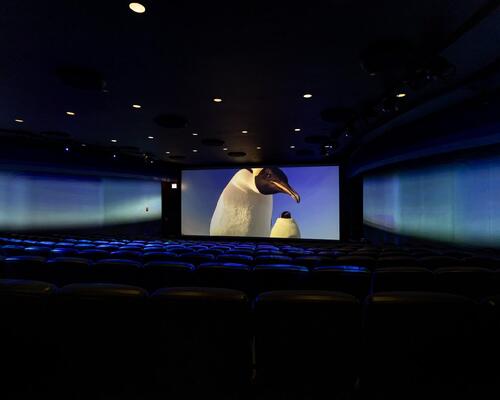
Shedd Aquarium upgrades its visitor experience with new Immersion Theater
Shedd Aquarium has opened the Immersion Theater developed in partnership with SimEx-Iwerks, as part of a wider strategy to enhance the guest experience and create additional revenue opportunities.
The attraction has transformed the aquarium’s Phelps Auditorium into a multi-sensory venue combining panoramic projection, environmental effects and interactive technology.
A new pre-show area allows visitors to engage with augmented reality marine animals before entering the
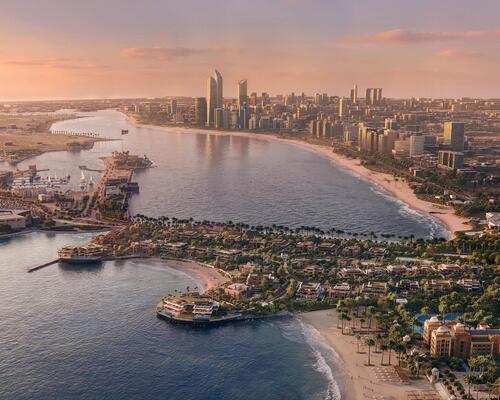
Mandarin Oriental announces standalone Mansions-branded residences for Abu Dhabi
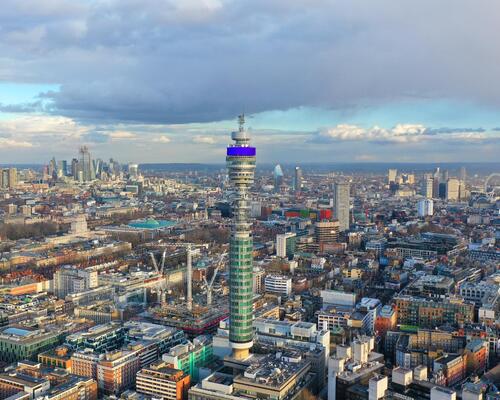
MCR is planning a luxury hotel for London's BT Tower
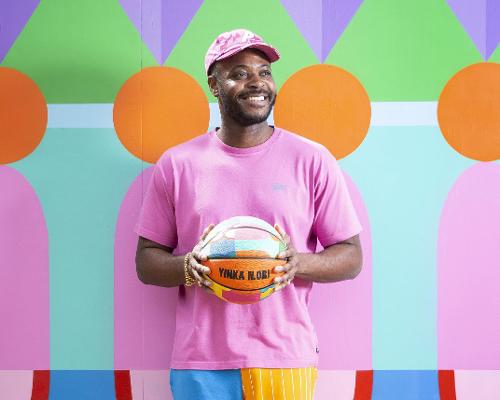
Joy as a radical act: Yinka Ilori launches solo exhibition celebrating the rebellious power of spreading happiness

Work gets underway on Madrid's €800 million leisure complex
Work is underway in Madrid on one of Europe’s most significant multi-functional complexes, combining sport, entertainment, culture and education.
The €800 million initiative to regenerate the former Olympic Aquatic Centre in the north-east of the city, next to the Riyadh Air Metropolitano stadium, is being led by Barsento – a joint venture between Live Nation Entertainment, Oak View Group and Atlético de Madrid. The project will
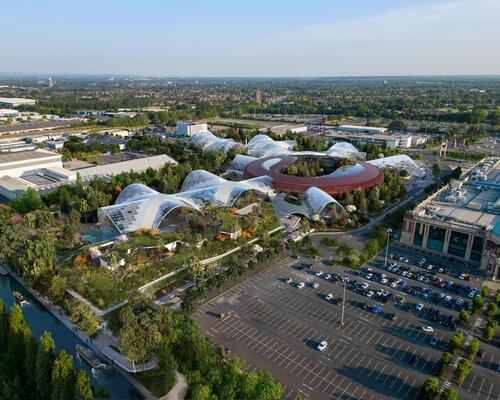
Therme Manchester reveals 90:90 strategy – 90 per cent of the UK population within a 90-minute drive of a Therme

Four Seasons’ Naples Beach Club opens 2,800sq m Sanctuary spa inspired by indigenous Calusa people
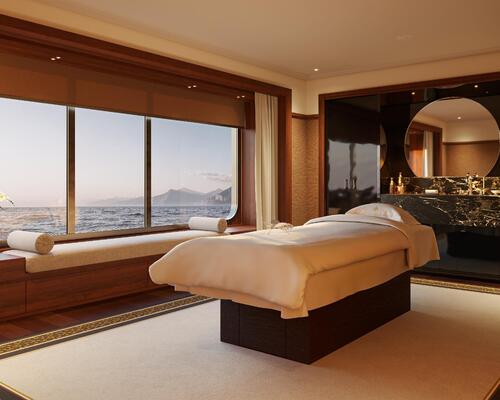
Orient Express Corinthian to host Ocean Rebirth wellness retreat in collaboration with Guerlain
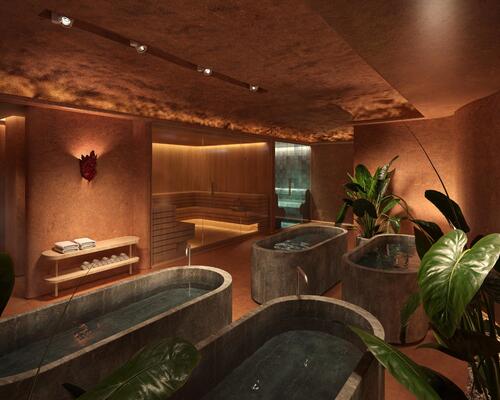
Famed London nightclub, Tramp, launches Tramp Health
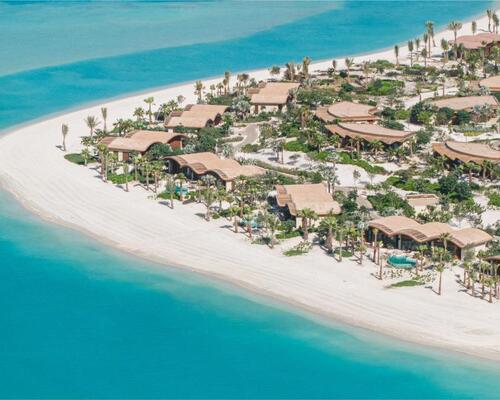
First look: Miraval opens on the Red Sea in Saudi Arabia

Hainan Science Museum by Ma Yansong, opens in China
A new science museum has opened to the public in Haikou after attracting more than 350,000 visitors during a four-month soft opening period.
Designed by Ma Yansong and his practice MAD Architects, the Hainan Science Museum is located on the edge of Wuyuan River National Wetland Park and has already recorded peak attendance of more than 5,800 visitors in a single day.
Commissioned by

Zannier Île De Bendor launches with design by Hardel Le Bihan Architectes
Sæl Spa readies for launch in London: “a modern British sanctuary”
Immersive art bathhouse Submersive announces debut location in Austin

Construction begins on regenerative wellness destination The Shenandoah Nature Resort

Royal Caribbean reveals record-breaking cruise ship

V&A East opens in London

David Geffen galleries open at LACMA

New venue The Lands by Capella includes a longevity centre to complement sister hotel Capella Sydney

World of Frozen launches at Disneyland Paris
Pical Resort by Valamar reveals first Croatian spa under the ESPA brand

Mandarin Oriental creates end-to-end Egyptian journey with two new hotels and first-ever luxury river cruise

Designers Mendil + Meyer launch new division called Lām Concepts for strategic wellness projects
Wilderness Bisate in Rwanda reveals brand’s second Sanctuary spa
4a Architekten shares details of wellness extension at Salinarium Bad Dürkheim Thermal Spa