Feature
Prescribing wellbeing
We know the places we live affect how healthily we live, but never before have they been prescribed quite like this. Stu Robarts walks the streets of the Healthy New Towns initiative to find out more about its prognosis



It’s perhaps unsurprising that the National Health Service (NHS), the UK Government’s health and medical agency, has never got involved with building a town before. Coughs and colds have naturally taken precedence over homes and roads.
But there’s an increasing recognition that fixing people can only go so far in progressing public health. Instead, the NHS is seeking a more proactive approach to healthcare. The thinking goes that fewer people will need fixing if health is embedded more fundamentally into our lifestyles. And where better to embed it than the places we live?
The Healthy New Towns initiative which is being driven by the NHS seeks to do exactly that. It will see 10 new towns built with the healthy lifestyles of residents central to their designs.
The scheme has been built on the foundations of the NHS 2014 Five-Year Forward View strategy, which recognised that there was a greater strain than ever being put on the health service. It proposed that tackling this means giving people greater control of their own care, breaking down barriers to how this is provided and developing innovative new ways to promote and deliver healthcare and wellbeing in the home.
One such innovative approach was rethinking how new housing developments and towns can be designed to promote healthier living. This, coupled with the other measures, is the basis for the Healthy New Towns initiative.
But it’s about more than building healthy places to live. It’s a grand experiment exploring how the design of the places we live can improve the health of populations.
In addition to finding out which elements of town design can improve public health, the initiative is also aiming to develop new models of care, rethink how health and care services can be provided and draw up new best practice approaches.
Making health a local business
The Healthy New Towns scheme was launched in March 2016, with NHS chief executive Simon Stevens talking of an opportunity to ‘design out’ obesogenic environments, and ‘design in’ health and wellbeing.” Expressions of interest had been sought the previous summer, resulting in a remarkable 114 responses from the likes of local authorities, housing associations and developers who wanted to get involved.
Responses were whittled down to 10 and “demonstrator sites” were chosen to be built across the country.
The developments range in size from 800 to 15,000 homes and there was no blueprint provided as to how they should be built. The developers of each simply had to show an understanding of their own wellness priorities and provide rationales for radical new approaches to address them.
Halton Lea in Runcorn is the smallest development, followed by Barton in Oxford with 885 homes. Whyndyke Garden Village in Fylde, Darlington in County Durham and Whitehill and Bordon in Hampshire each have between 1,000 and 4,000 homes planned, while the homes at Bordon are to be built on land which was previously owned by the government’s Ministry of Defence (MoD).
Bicester in Oxfordshire has 6,000 homes in the works and Cranbrook in Devon 8,000. The three biggest sites are Northstowe in Cambridgeshire (also former MoD land), Barking Riverside in London and Ebbsfleet Garden City in Kent with 10,000, 10,800 and 15,000 homes, respectively.
Ideas to spark wellbeing
The proposed ideas for promoting healthy lifestyles at the various sites range from the obvious and practical, like the provision of ample green space, to the more considered and involved, like building multidisciplinary health and wellness centres and designing their operations from the ground up to ensure people can be seen for multiple different but related appointments all on the same day, to enable people to see a doctor, for example, and then to get exercise prescription.
Other features include infrastructure for children to walk or cycle to school and to play along the way, fast-food-free zones near schools and dementia-friendly street design. Each set of features reflects the unique health and wellness challenges that the different sites will be tackling.
Healthy place plans
Perhaps the most notable of the demonstrator sites is Halton Lea – the first location to be chosen. Because it was at the very beginning of the process, it had the most scope for what the NHS has called “bold new ideas”. For that reason, it was afforded its own design challenge. There were 34 bids, with London-based firm Citiesmode ultimately triumphing.
Its “Halton Connected” concept will see health-focused ideas baked into the new development with a view to supporting people of all ages. Amongst them are a mobile app that will reward users for walking, by giving discounts at local shops, an urban obstacle course connecting sports facilities around the town and free bikes at new housing developments.
A community kitchen will serve local schools and hospitals, as well as offering healthy cooking lessons for all residents. Universal WiFi, meanwhile, will ensure that all residents have easy access to health services.
The site that has attracted the most attention is Ebbsfleet. It hit the news this summer as the shortlist for its design competition was announced. Between them, the five finalists proposed an educational wildlife trail, a landscape blending “land, play, workspace and recreation”, accessible green routes for everyday journeys, a web of integrated services and a plan to regenerate, repair and rejuvenate the local area.
Building a legacy
Buoyed by the positive response to Healthy New Towns, the NHS is laying the groundwork for the scheme’s legacy and in the belief that housing developers and associations have a big part to play in shaping the health of new communities, it has assembled a network of 12 organisations to implement and promote the principles on which it is based. As the network grows, it’s hoped that the approach to building healthy new towns becomes a healthy habit within the industry.
10 Healthy new towns
The NHS is working with 10 housing developments across England to shape the health of communities and rethink how health and care services can be delivered
Demonstrator sites
1. Whitehill and Bordon, Hampshire
3,350 new homes on former Ministry of Defence land
2. Cranbrook, Devon
8,000 new residential units
3. Darlington, County Durham
2,500 residential units across three linked sites in the Eastern Growth Zone
4. Barking Riverside, London
10,800 residential units on London’s largest brownfield site
5. Whyndyke Garden Village, Fylde, Lancashire
1,400 residential units
6. Halton Lea, Runcorn
800 residential units
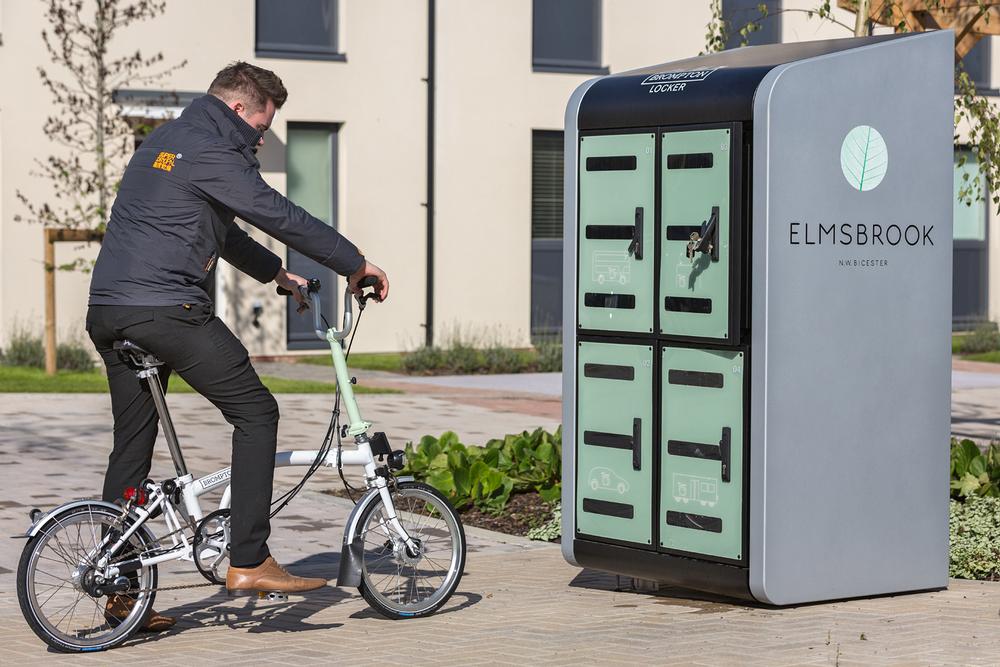
7. Bicester, Oxfordshire
6,000 homes in North West Bicester, 13,000 for Bicester in total
8. Northstowe, Cambridgeshire
10,000 homes on former Ministry of Defence land
9. Ebbsfleet Garden City, Kent
Up to 15,000 new homes in the first garden city for 100 years
10. Barton, Oxford
885 residential units






















Designed to restore neglected land and renew the identity of Iraq’s capital city, Baghdad Sustainable Forests promises a new way of living surrounded by nature. Gensler’s Ian Mulcahay tells us why he thinks the project could become a model for the repair and enhancement of urban centres