Wild places
Messner Mountain Museum
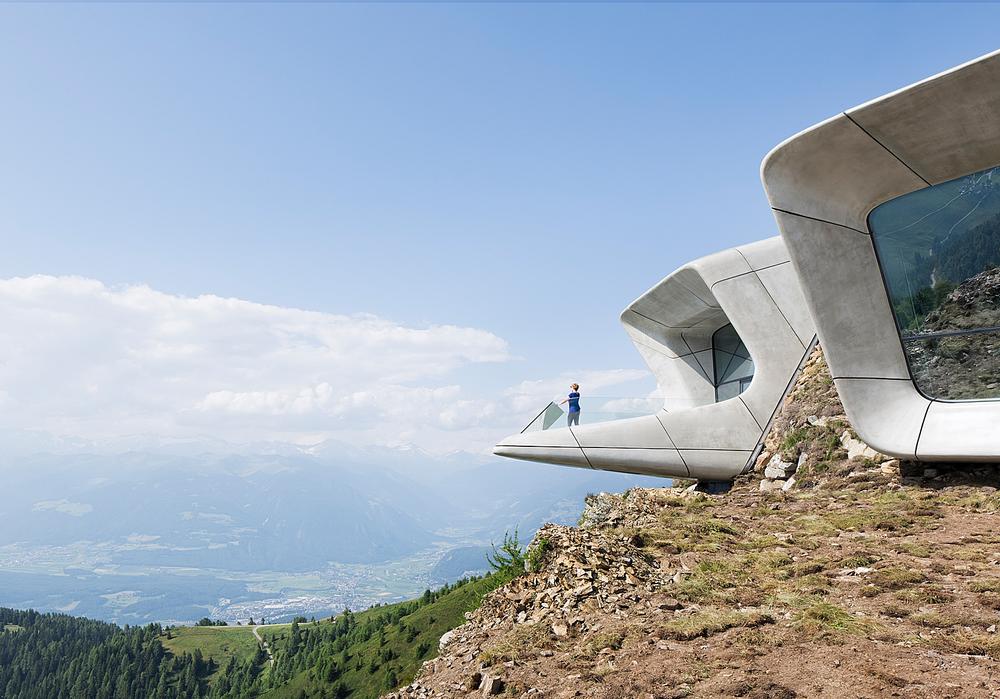
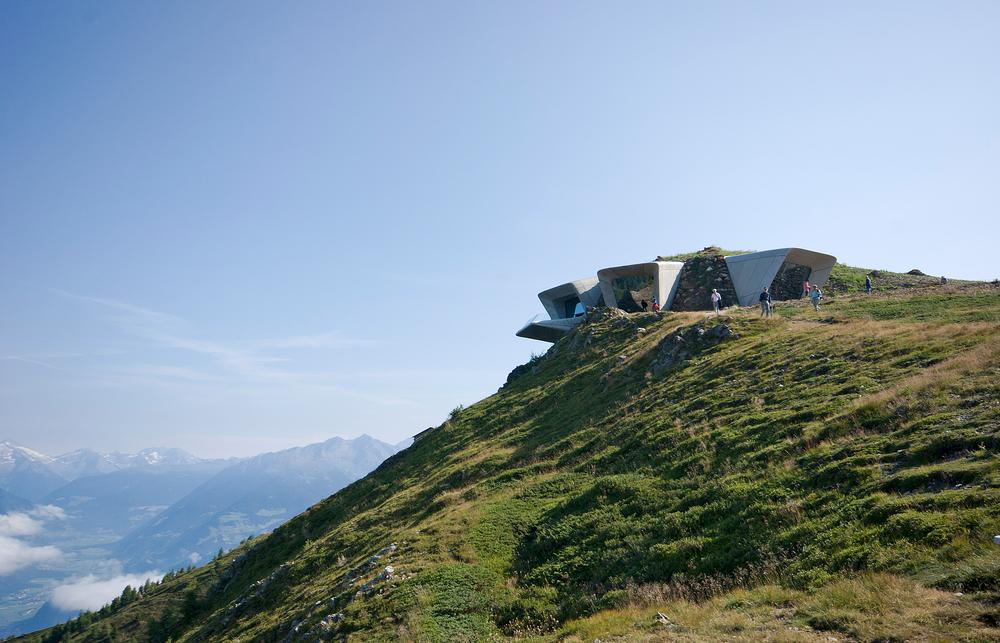
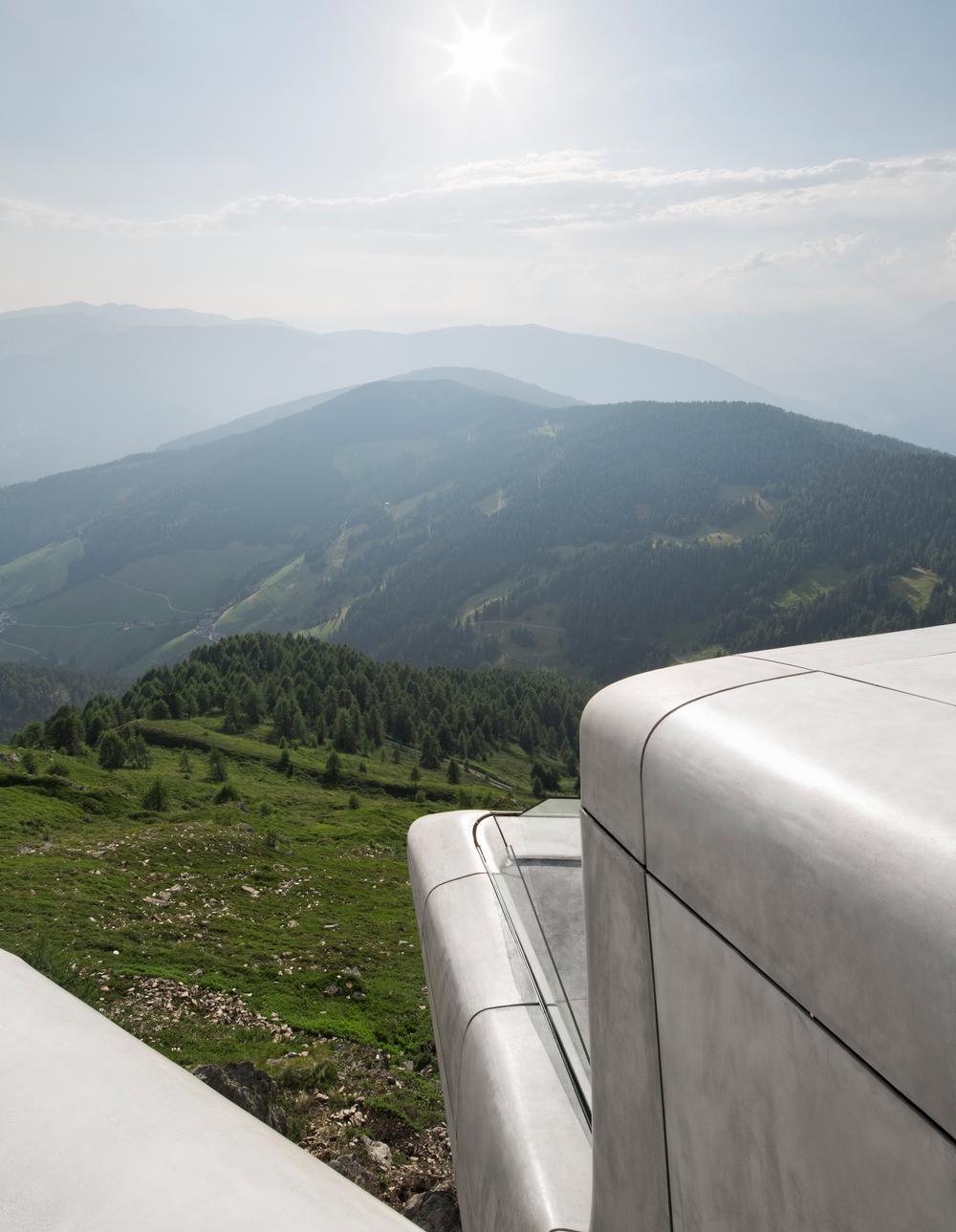
Zaha Hadid’s Messner Mountain Museum Corones makes the most of its spectacular surroundings and brings a new kind of visitor to the mountain. Project architect Peter Irmscher talks Kath Hudson through the challenges of building it



When did you first get involved and what was the brief?
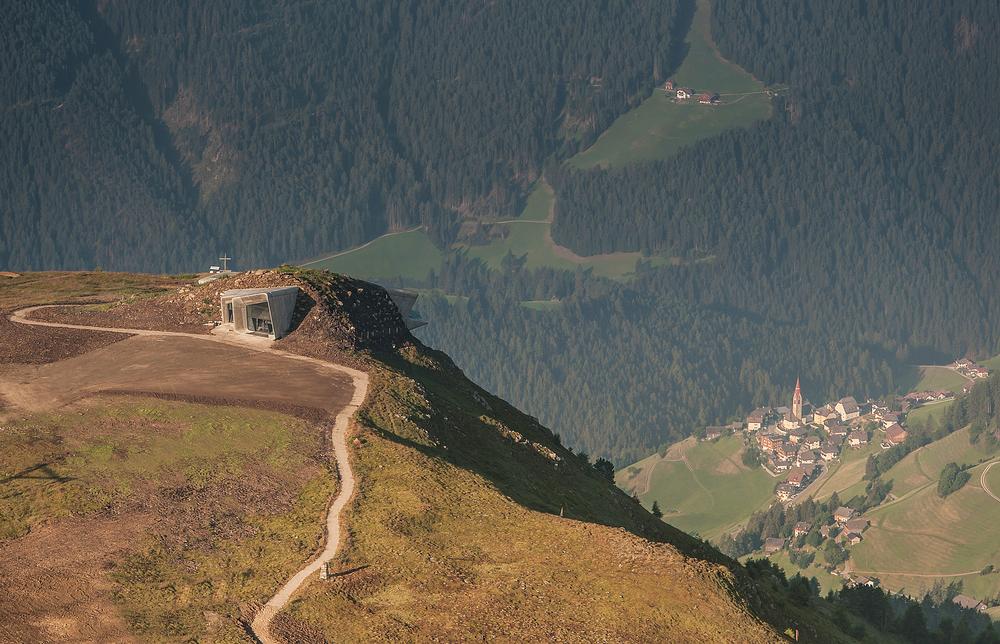
Initially, the company that runs the ski lift at the Kronplatz ski resort in Italy ran a competition to design a viewing platform there. During the winter up to 30,000 people ski each day, but it’s much quieter during the summer, so they thought about a sustainable way of using the ski lift.
Although the competition was for a viewing platform, the client was so happy with our proposal that they decided to develop it further by bringing Reinhold Messner on board and creating a museum, thinking it was a good idea to introduce culture to the spectacular Alpine landscape.
Messner is a wealth of knowledge about mountain ranges: he has climbed all the 8,000m-high mountains, including Everest (without oxygen) and has also walked through the Arctic. Everything he says is an interesting story. It was his idea to build under the ground and also to have framed points of the mountain panorama within the museum.
How involved in the project was Reinhold Messner?
He was very involved at the beginning of the project, but then he left us to get on with our work. We asked him a lot about what he wanted to exhibit and what paintings to hang on the walls, and tried to plan the exhibition according to his wishes.
At the outset he didn’t know what he wanted to exhibit. He told us to build the museum and said that by the end he would have his collection together. He gathered the stuff he wanted to show from his own belongings: presents from hiker friends, paintings he had bought or been given.
It was hard at the beginning to adjust the building to the exhibition; we knew the theme was rocks and climbing and we tried to interpret it in our own way. We didn’t want to be that strict about how many square metres were for hanging, instead we wanted to be flexible. When hanging the paintings, we put the screws in a grid and covered them again so that paintings could be easily moved around.
Were you inspired by any other museums or buildings?
The engagement with nature, and indeed mountains, is something Zaha Hadid has explored since the very beginning of her career. Her proposal for the Hong Kong Peak Club in 1982 was derived from the natural geology and topography of Victoria Peak that towers over the city.
As an office, we’ve been working on other projects that connect directly with nature – and with the Alps in particular. The Bergisel Ski Jump and the Nordpark Cable Railway in Innsbruck are so far the most prominent projects in a mountainous environment, and the Messner Mountain Museum is an exciting new aspect to this strand of our work.
Did the location present logistical problems?
The biggest problem was the weather and getting materials to site. Our client’s main interest was keeping the ski lift running as long as possible, so the time we could build on site was limited to five months a year. This meant the project took three years to complete.
What is the visitor journey?
It starts before you enter the building, as you travel to the peak by hiking or cable car. Visitors experience the landscape before they experience the museum.
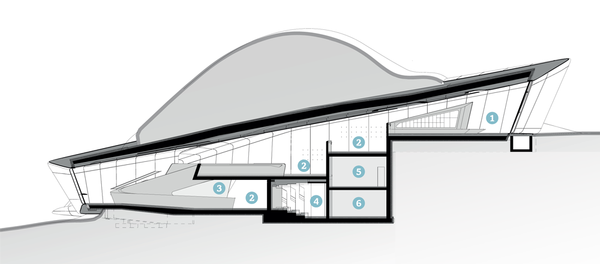
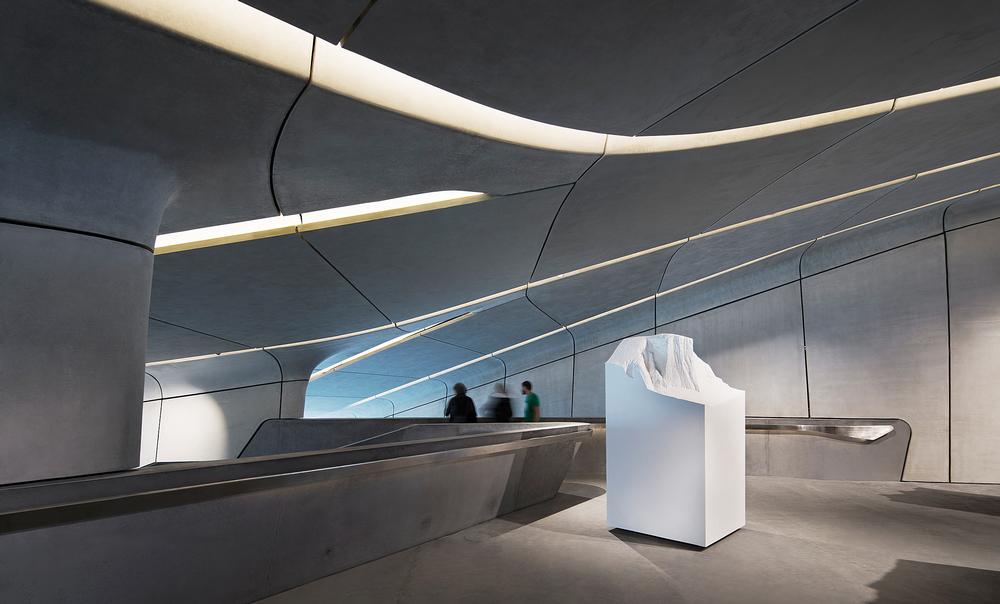
You enter the museum and the view is blocked, forcing a shift of focus to the exhibition, which explores rocks, mountains, hiking and conquering this type of landscape. The visitor is drawn downwards, through a cascade of paintings, until they come to a point where there are three framed views – two of the main peaks and of the rock where Reinhold first started climbing. They are the highlighted points in the panorama.
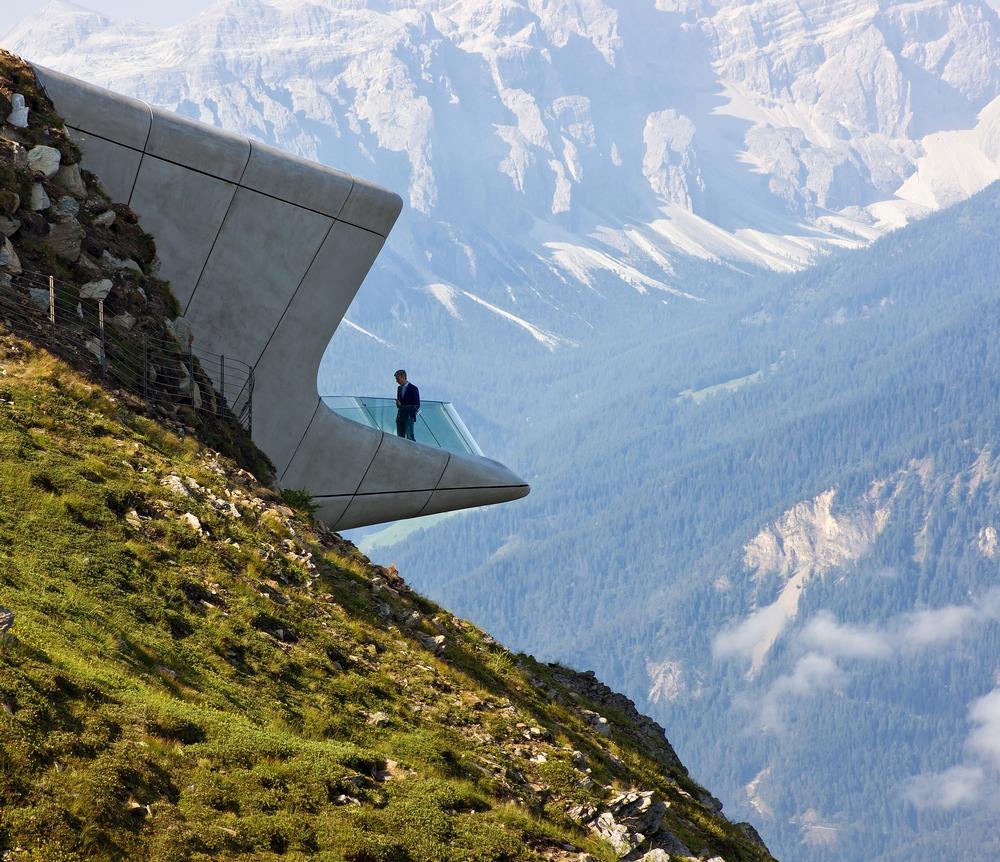
Visitors then take the stairs down to another display of hiking tools and can access the terrace to enjoy the full panorama again. On the lowest floor is a cinema.
I think the museum design is amazing and enhances and highlights the incredible views, while also pulling visitors into another interesting world. The exhibition provides another level of information about the landscape, explaining what it means to navigate through this mountainous area or how it feels to climb a vertical rock wall.
What colours and materials were used?
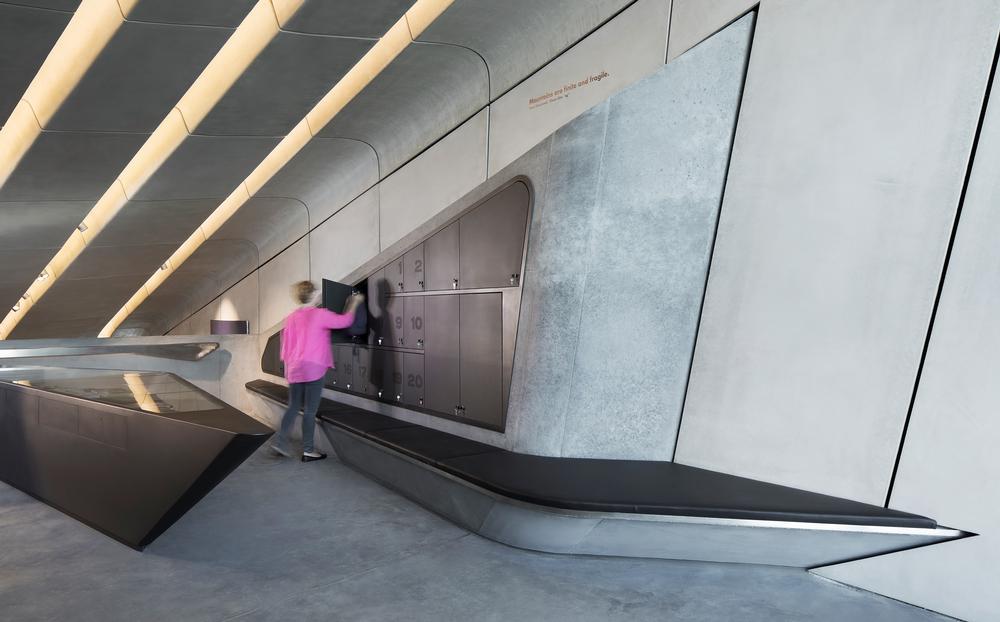
We used a bright concrete and a darker concrete to reflect the two different stones you find in the surrounding mountain ranges. The Dolomites are more like chalk, a brighter stone, and the Alps are darker and volcanic.
What about lighting?
We mostly used indirect lighting – lighting spikes in the ceiling and spotlights cantilevering out of the lighting channels in the ceiling. These are directed onto the paintings and are flexible, so if the paintings change position, the lights can too. It’s quite dark inside, which suits the cave image.
What were the high points and low points?
The low point was when we tried to open the building in 2014 for Reinhold’s 60th birthday, but there was a delay in construction and we had to postpone till summer 2015.
The high point was the opening; it was really interesting to see visitors’ reactions.
What were the main challenges on the way?
Getting the panels and glass sheets up the mountain was a real challenge and we had to use special transportation.
These type of projects are usually carried out in an urban environment, so it was different to do it in the mountains with contractors unfamiliar with this type of construction. The client was keen to use a local contractor, so we had to work with them to share our knowledge. They were really passionate and keen to learn, and in the end everyone was proud of the quality of what we achieved.
In this region you have to be experienced to handle the altitudes, so that was a significant advantage of using a local contractor.
How do you think the design helps to tell the story?
We provided the canvas for the story Reinhold wanted to tell. The path through his exhibition has created another level of experiencing his life story.
But the MMM Corones also attracts another type of visitor to the mountain: those who want to see the architecture, as well as the exhibition. You can access the museum by skis: the whole idea is to park your skis outside and one of the specifications was that you had to be able to walk through with ski boots on. It will hopefully become part of the skiing experience.
It’s interesting to combine skiing and culture. Do you think we’ll start seeing more cultural projects in ski resorts?
Competition is high in alpine areas. Some of the valleys are trying to differentiate themselves with pop concerts and marketing, but I think using culture, museums and architecture is a better way to stand out.
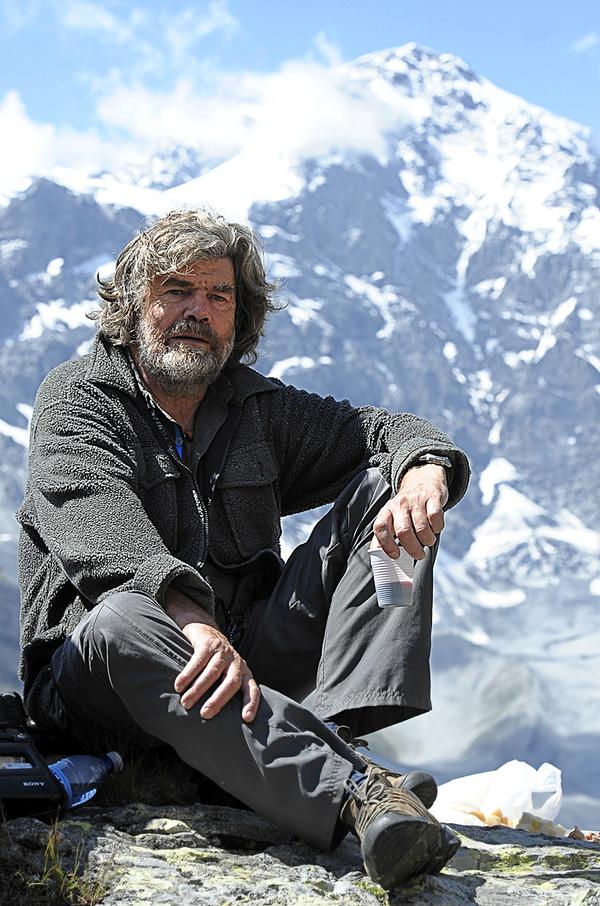
REINHOLD MESSNER
Italian mountaineer and explorer Reinhold Messner is widely regarded as the world’s greatest living climber.
Born in the South Tyrol in 1944, Messner was the first person to climb all 14 peaks over 8,000m, and made both the first solo ascent and the first ascent of Everest without supplementary oxygen.
He has completed numerous other expeditions, including walking 1,200 miles across the Gobi desert on foot at the age of 60. Messner has helped to create a network of six Messner Mountain Museums in South Tyrol and Belluno. These cover different aspects of mountaineering and the mountains, including one on mountain people, one on ice, and one on ‘the magic of the mountain’ featuring several fine art collections. The Messner Mountain Museum Corones was the final in the series to open, and is devoted to the ‘supreme discipline of mountaineering’.
Messner Mountain Museum Corones
Longitudinal section








Designed to restore neglected land and renew the identity of Iraq’s capital city, Baghdad Sustainable Forests promises a new way of living surrounded by nature. Gensler’s Ian Mulcahay tells us why he thinks the project could become a model for the repair and enhancement of urban centres