New Deloitte report finds the health and fitness sector contributes up to US$91.22bn a year to global GDP



A new report by Deloitte, outlining the social and economic value of the global health and fitness industry, has been released by The Global Health & Fitness Alliance (GHFA), in collaboration with IHRSA.
The 418-page document – Economic health and societal wellbeing: quantifying the impact of the global health and fitness sector – outlines the impact of the health and fitness industry on GDP and healthcare systems worldwide, as well as specific activity in 46 different countries and territories. It has identified a total impact of up to US$91.22bn per annum*.
The premise of the report is that the industry is a major contributor to GDP and employment globally and that its presence – through gyms, clubs and physical facilities – raises activity levels in the local community, which increases GDP and reduces healthcare costs.
By reviewing existing data, academic studies and industry reports, the authors have devised a way to indicate the impact of the industry, firstly by explaining the economic impact of absenteeism and presenteeism, and secondly by citing how much an inactive worker in each country or territory costs the economy.
This figure is key, because the report makes tangible recommendations, suggesting that investing a similar amount in helping inactive individuals adhere to exercise habits would generate benefits to GDP and the healthcare system, resulting in a payback to the economy after only one year.
By evaluating data and economic studies, the report shows how active citizens create value-added GDP, which cuts healthcare costs and absenteeism and presenteeism.
Reviewed studies come from organisations such as the World Bank, the OECD and the World Health Organization (WHO), while researchers also studied academic papers – such as RAND (2019), which found inactive individuals lose 2.6 – 3.71 days’ working time due to presenteeism, and a Lancet-published report that found inactivity cost healthcare systems US$53.8bn worldwide, as far back as 2013.
“This report begins to paint a picture of the industry’s impact on population health and the economic impact of the industry,” reads the foreword from the GHFA and IHRSA. “Not only does the industry employ millions of people around the world and generate billions in value-added to GDP, but it also has an incredibly positive influence on health outcomes. In doing so the industry collectively saves billions in healthcare costs and productivity benefits.”
The report’s layout for each country or territory starts with its status in figures relating to GDP per capita, healthcare spending as percentage of GDP, disposable income per capita, ageing trends, percentage of insufficient activity and obesity level. Health trends and government initiatives follow, then economic impact.
For the UK, for example, the health and fitness industry in 2021 had a direct value add of US$3bn and supported an additional US$1.5bn in value-added in its supply chain as well as 50,100 jobs. Deloitte then reveals the economic benefit for each inactive worker who becomes active.
With exercise comes improved health benefits, such as a reduced risk of heart disease, stroke, hypertension, type 2 diabetes, dementia, depression, anxiety and a range of cancers, including breast, colon, bladder, kidney, lung and stomach. By linking the impact of activity to GDP and healthcare costs Deloitte demonstrates how exercise adoption can remove a burden from the healthcare system, as well as increasing GDP.
Inactivity cost the UK healthcare system US$4.3bn a year according to the report, of which US$3.6bn is covered by the public health system. Each year the UK loses 43.8m working days in absenteeism and presenteeism, which costs the UK economy US$16.5bn annually.
It concludes that every inactive worker costs the economy US$1,713 per year and investing US$1,700 in helping an inactive person to become active, results in payback in less than a year.
In the US, inactivity costs the healthcare system US$84.7bn, every inactive worker costs the economy US$3,447 per year, and a US$3,000 investment is suggested to transform inactive people into regular exercisers.
In Spain inactivity costs the healthcare system US$7.2bn, it loses 19.8m working days in absenteeism and presenteeism and every inactive worker cost the economy US$1,978 (US$2,000 investment per inactive person recommended).
In China, inactivity costs the healthcare system US$15.3bn, while the nation loses 381.5m working days in absenteeism and presenteeism and every inactive worker costs the economy US$466 (with a US$400 investment per person recommended).
“The good news is that if implemented correctly, programmes to increase exercise can be habit-forming (Kaushal & Rhodes, 2015),” reads the report. “An initial investment in one year can have a pay-off that lasts for years if a habit is built.”
The authors of the report, Alan McCharles, partner at Deloitte China, Adrian Xu, director at Deloitte China and Nicholas Young, senior associate at Deloitte China, also conducted interviews with industry stakeholders to shed light on some of the problems with current government and industry perceptions, collaboration and integration. It also highlighted how they are working together in China, USA and Japan.
One of the issues raised is governments viewing gym membership as a recreational activity rather than a health investment. In the UK, gym membership carries 20 per cent VAT, while in Belgium use of sports facilities has a rate of only 6 per cent.
Stakeholders suggested that purchases such as this should carry a more favourable tax rate.
Personal training programmes, physical activity policies and exercise as preventative care are suggested as ways governments could work with the health and fitness industry to drive the transformation of inactive people.
The most established fitness markets – evaluated by penetration rates among adults – are Sweden (34%), the USA (30%), the UK (23%), Australia (23%) and Germany (22%).
Fast-growing markets include Hong Kong (8%), Singapore (7%), Japan (6%) and China (6%).
Underdeveloped markets are Malaysia (1.5%), Thailand (0.7%), Vietnam (0.7%) and India (0.2%).
According to GHFA and IHRSA, the 46 countries and territories chosen for inclusion in the study account for around 90 per cent of global GDP. They are Argentina, Australia, Austria, Belgium, Brazil, Bulgaria, Canada, Chile, China (PRC), Chinese Taipei, Colombia, Costa Rica, Cyprus, Czech, Denmark, Finland, France, Germany, Greece, Hong Kong SAR – China, Hungary, India, Indonesia, Ireland, Italy, Japan, Malaysia, Mexico, Netherlands, New Zealand, Norway, Peru, Philippines, Poland, Portugal, Russia, Singapore, South Africa, South Korea, Spain, Sweden, Switzerland, Thailand, United Kingdom, United States and Vietnam.
To access the report, go to www.ihrsa.org.
*Some double counting has been identified in this number.
GHFA IHRSA Deloitte Global Health & Fitness Alliance GDP Alan McCharles Adrian Xu Nicholas YoungDeloitte says European fitness sector is recovering: memberships and number of clubs up in 2021
Andrea Bell is the new chair of the Global Health & Fitness Alliance
IHRSA Smart Summit and FitnessConnected events get underway in Munich
Greg Oliver to chair Global Health & Fitness Alliance advisory council
IHRSA’s 40th annual convention kicks off as a hybrid event
FEATURE: Write to reply – Supporting mental health
FEATURE: Annual report – Deloitte's annual European Health and Fitness Market Report
FEATURE: Interview – Greg Oliver


BIG unveils Eve Music Hall as Croatia venue nears completion
Bob Rogers hands BRC to long-serving leadership team

Wellness care hospital opens in Vilnius with innovative spa and hospitality concept

Universal and Puy du Fou projects point to rise of Oxford–Cambridge corridor
A proposed Puy du Fou development near Bicester and Universal Destinations and Experiences’ planned resort in Bedford are emerging as part of a wider transformation of the Oxford–Cambridge Growth Corridor into a major centre for UK leisure and tourism investment.
For years, the corridor has been associated primarily with science, technology, housing and university-led economic growth. However, the clustering of large-scale visitor attraction projects along the

All-inclusive eco-wellness development Auko to open near Vietnam’s Son Doong caves
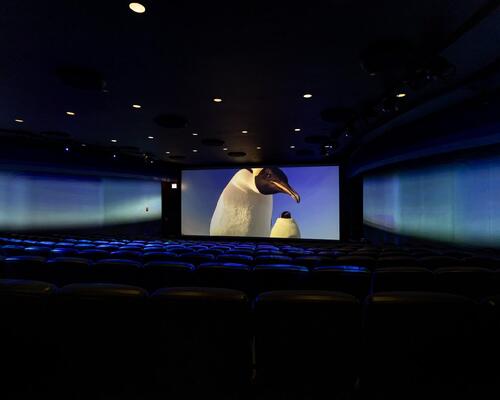
Shedd Aquarium upgrades its visitor experience with new Immersion Theater
Shedd Aquarium has opened the Immersion Theater developed in partnership with SimEx-Iwerks, as part of a wider strategy to enhance the guest experience and create additional revenue opportunities.
The attraction has transformed the aquarium’s Phelps Auditorium into a multi-sensory venue combining panoramic projection, environmental effects and interactive technology.
A new pre-show area allows visitors to engage with augmented reality marine animals before entering the
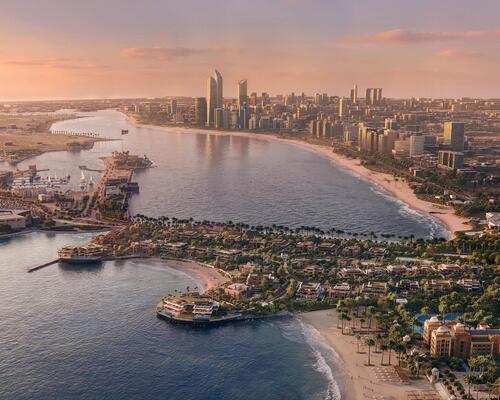
Mandarin Oriental announces standalone Mansions-branded residences for Abu Dhabi
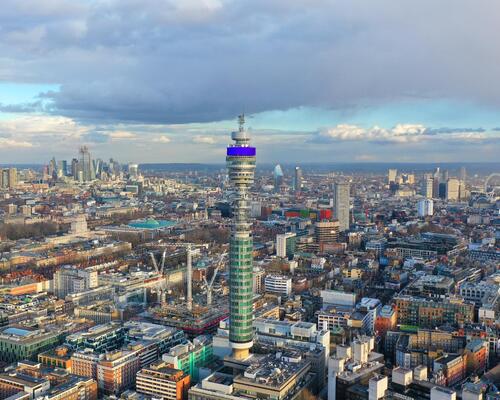
MCR is planning a luxury hotel for London's BT Tower
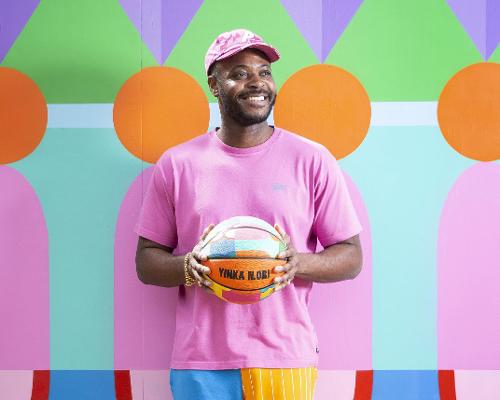
Joy as a radical act: Yinka Ilori launches solo exhibition celebrating the rebellious power of spreading happiness

Work gets underway on Madrid's €800 million leisure complex
Work is underway in Madrid on one of Europe’s most significant multi-functional complexes, combining sport, entertainment, culture and education.
The €800 million initiative to regenerate the former Olympic Aquatic Centre in the north-east of the city, next to the Riyadh Air Metropolitano stadium, is being led by Barsento – a joint venture between Live Nation Entertainment, Oak View Group and Atlético de Madrid. The project will
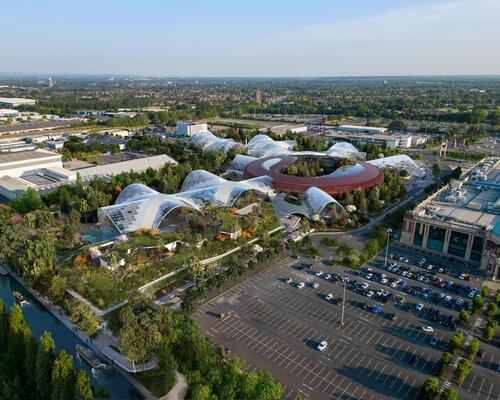
Therme Manchester reveals 90:90 strategy – 90 per cent of the UK population within a 90-minute drive of a Therme

Four Seasons’ Naples Beach Club opens 2,800sq m Sanctuary spa inspired by indigenous Calusa people
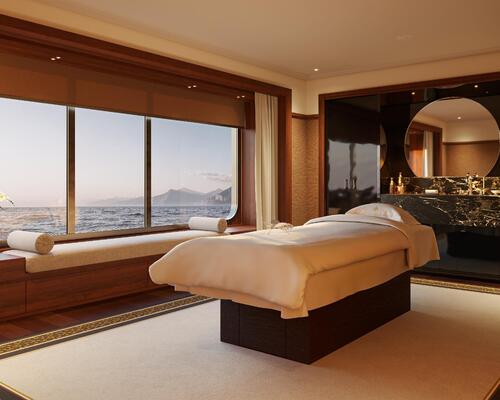
Orient Express Corinthian to host Ocean Rebirth wellness retreat in collaboration with Guerlain
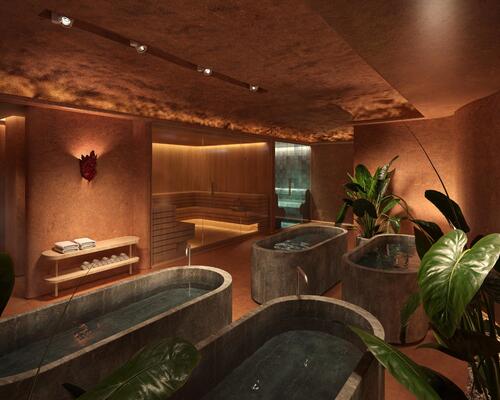
Famed London nightclub, Tramp, launches Tramp Health
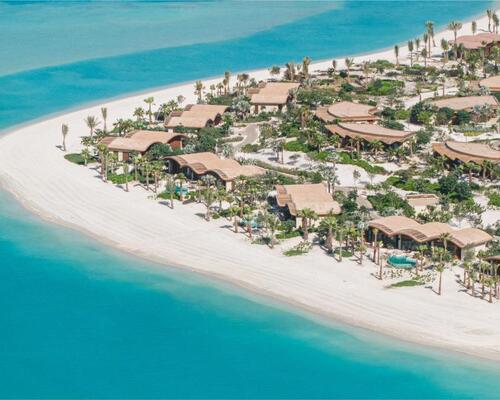
First look: Miraval opens on the Red Sea in Saudi Arabia

Hainan Science Museum by Ma Yansong, opens in China
A new science museum has opened to the public in Haikou after attracting more than 350,000 visitors during a four-month soft opening period.
Designed by Ma Yansong and his practice MAD Architects, the Hainan Science Museum is located on the edge of Wuyuan River National Wetland Park and has already recorded peak attendance of more than 5,800 visitors in a single day.
Commissioned by
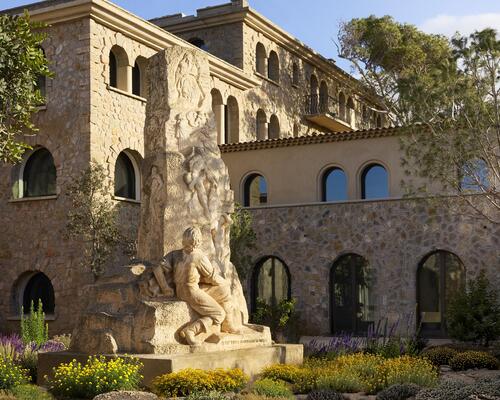
Zannier Île De Bendor launches with design by Hardel Le Bihan Architectes
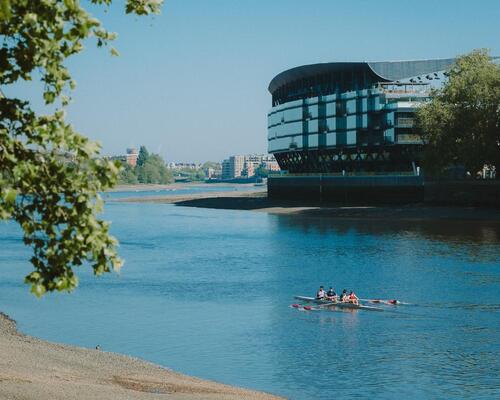
Sæl Spa readies for launch in London: “a modern British sanctuary”
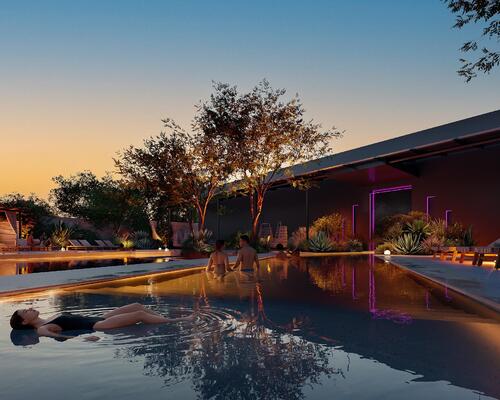
Immersive art bathhouse Submersive announces debut location in Austin

Construction begins on regenerative wellness destination The Shenandoah Nature Resort

Royal Caribbean reveals record-breaking cruise ship
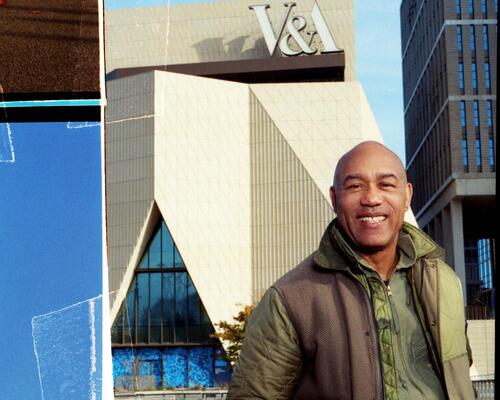
V&A East opens in London
David Geffen galleries open at LACMA

New venue The Lands by Capella includes a longevity centre to complement sister hotel Capella Sydney

World of Frozen launches at Disneyland Paris
Pical Resort by Valamar reveals first Croatian spa under the ESPA brand

Mandarin Oriental creates end-to-end Egyptian journey with two new hotels and first-ever luxury river cruise

Designers Mendil + Meyer launch new division called Lām Concepts for strategic wellness projects
Wilderness Bisate in Rwanda reveals brand’s second Sanctuary spa
4a Architekten shares details of wellness extension at Salinarium Bad Dürkheim Thermal Spa
















Designed to restore neglected land and renew the identity of Iraq’s capital city, Baghdad Sustainable Forests promises a new way of living surrounded by nature. Gensler’s Ian Mulcahay tells us why he thinks the project could become a model for the repair and enhancement of urban centres