Annual report
Deloitte's annual European Health and Fitness Market Report
In April, Deloitte and Europe Active published the ninth edition of their yearly European Health and Fitness Market Report, as Karsten Hollasch explains



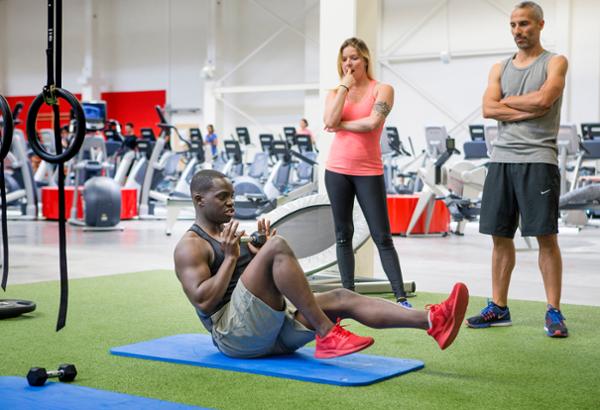
Similar to the year 2020, the European fitness market was strongly impacted by temporary COVID-19-related club closures and operational restrictions during 2021. As a consequence, many operators tried to overcome this situation through the development of innovative solutions and concepts to enable fitness practitioners to either work out in a safe environment, or in a virtual environment when fitness clubs were closed.
Beyond the health club
Besides market developments and trends, this year’s report provides additional insights into the fitness behaviour of European consumers which goes beyond health clubs.
Almost 11,000 consumers from 19 countries were asked about their fitness routines in a representative survey in terms of gender, age and urbanisation. Even if the survey results show that the pandemic had a negative impact on consumers’ fitness behaviour in many European countries (in 14 of the 19 countries, the share of consumers who cut back their fitness routines since the outbreak of the pandemic exceeds the share of consumers who increased their exercise frequency), the consumer sentiment indicates that an increase in physical activity beyond pre-COVID-19 levels might occur once exercise becomes and remains possible in a safe and largely unrestricted setting.
After the sharp decline of fitness market KPIs in 2020, the number of European fitness clubs (63,173) and overall memberships (56.3 million) in 2021 increased slightly by +0.2 per cent and +2.0 per cent, respectively.
A further reduction was prevented mainly through the strong rebound in memberships in the UK and Spain – two of the biggest European markets – as well as through the continued expansion of larger fitness operators compensating for pandemic-related club closures.
The situation is different for total revenues which decreased by 11.4 per cent to €17.1 billion due to the pandemic. Similar to the previous year, gyms in many European countries had to close for several months so that from an accounting perspective, no revenues could be realised during these periods.
Regional variations
However, contrary to what these overall values suggest, the ‘European fitness market’ does not exist, but is the aggregation of various, often highly heterogeneous markets which are not moving in a uniform direction. The two largest European fitness markets, Germany and the UK, stand representative of this.
As fitness club operations in Germany were subject to comparatively strict, pandemic-related measures (including club closures for almost half of the year) in 2021, revenues dropped by 46.4 per cent to €2.23 billion whereas gym operators in the UK benefited from comparatively early club re-openings, combined with the lifting of restrictions and hence, experienced a strong membership rebound, resulting in a revenue increase of 34.4 per cent to €3.56 billion. This means that last year’s revenue development in these two countries – when total revenues in the UK (-51.9 per cent) dropped by a larger share than in Germany (-24.5 per cent) – has been reversed.
Despite the overall revenue decrease in the European market, the Top-15 operators were able to increase their revenues (+1.8 per cent) to a cumulated value of €3.1 billion in 2021. Especially leading fitness chains from the UK, such as David Lloyd Leisure (+56 per cent, including government payments), PureGym (+21 per cent – Deloitte estimate based on companies’ Q3 2021 revenues), GLL (+11 per cent) and The Gym Group (+39 per cent) regained momentum.
Also, in terms of membership, the leading European operators were able to outperform the market. The above-average membership growth of the top operators is strongly related to new club openings. The most aggressive expansion strategy is pursued by Basic-Fit which opened 110 new gyms in 2021 and plans to enter the German market in 2022.
Mergers and acquisitions
With 19 M&A deals in which a minimum of four gyms, as well as at least 50 per cent of the target’s shares, were acquired, the number of European brick-and-mortar M&A transactions in 2021 has settled at a constantly high level. The figures show that the trend of market consolidation by financial and strategic investors (ie other fitness club operators) continued despite the influence of the pandemic.
The largest transaction by number of clubs already took place at the beginning of the year when Svenska N’ergy AB, which operates fitness clubs under the STC brand, acquired 94 gyms from the Swedish franchise fitness company, Puls and Träning.
Also, the Spanish concession operator Forus continued its growth with the acquisition of 10 Spanish Holmes Place clubs and 18 sport facilities in Italy. The expansion was enabled by an investment from finance houses JP Morgan Asset Management and Ben Oldman Partners earlier in the year.
In Poland, fitness intermediary Medicover acquired 45 gyms in the course of four different transactions. Similar to its Polish competitor Benefit Systems, Medicover pursues a strategy of vertical integration by owning a network of different fitness operators.
An interesting out-of-the-box transaction was the arrival of Colruyt (a Belgian supermarket chain) which entered the health and fitness market with the acquisition of 27 Belgian clubs of Jims Fitness. Through the acquisition, Colruyt wants to combine nutrition and exercise competence for a powerful consumer experience.
Fitness behaviour
Although it’s difficult to predict how quickly the European fitness industry will be back to its pre-pandemic level, signs from the market in 2022 – with no or only a few limitations for gym operations – are very encouraging. As one example, Basic-Fit increased memberships by 18 per cent in the first quarter of 2022, compared to the end of the previous year.
The relatively fast return to fitness clubs not only underlines their advantages of professional equipment and social interaction, but also indicates that gyms will stay as centrepieces of the fitness ecosystem. Nevertheless, smaller operators will need more time to fully recover from the pandemic.
At the same time, new fitness solutions have been established to support fitness practitioners during their workouts outside the fitness club, most of them focusing on digitally enhanced or at-home fitness. Those new offerings enriched the variety of opportunities of which a consumer can choose to build their own fitness experience – based on individual preferences.

Karsten Hollasch



















Designed to restore neglected land and renew the identity of Iraq’s capital city, Baghdad Sustainable Forests promises a new way of living surrounded by nature. Gensler’s Ian Mulcahay tells us why he thinks the project could become a model for the repair and enhancement of urban centres