Interview
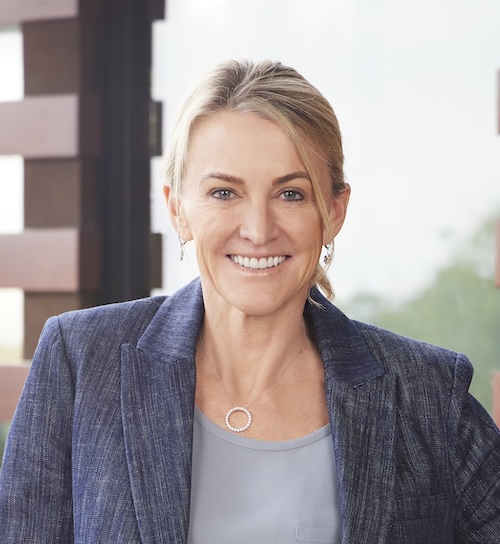
Greg Oliver
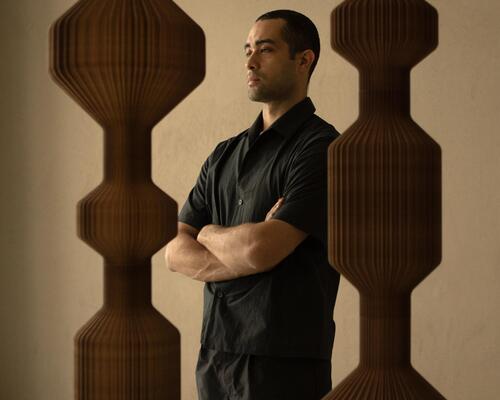
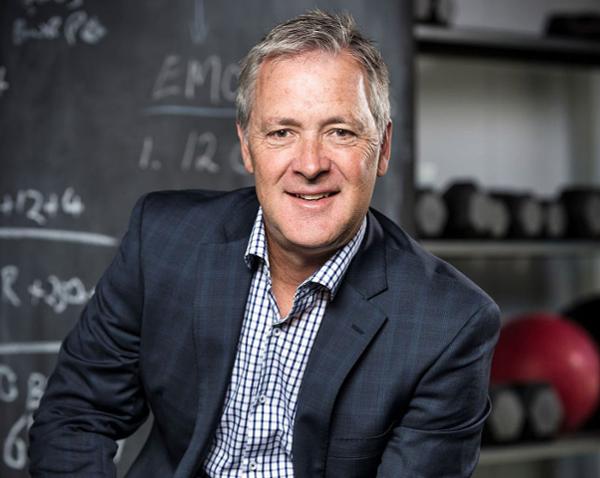
Greg Oliver, CEO of Fitness & Lifestyle Group, is chair of the Global Health & Fitness Alliance – a collaboration of industry leaders that have set out to achieve essential service status for the sector. He updates Kate Cracknell on progress



When and why was the GHFA founded?
The GHFA was founded in COVID-struck 2020, when gyms and wellness centres around the world were being forced into lockdown, often being the first to be closed and the last to re-open, in spite of our sector’s unparalleled health credentials.
Successive lockdowns have treated the health and fitness sector as if it were part of the hospitality industry, whereas the clue to our true value lies right there in our name: health.
This was the catalyst that led to the creation of the GHFA. Sector leaders around the world recognised an opportunity to change the agenda by coming together with a singular focus, a global remit and the authority to move at pace. Facilitated by IHRSA, we forged our alliance to support all the existing work being done across the sector.
The GHFA is now collaborating to evidence our sector’s value to society and public health. Our mission is to have health clubs recognised, across the globe, as an essential service – one that is committed to solving the crisis of physical inactivity.
We’re conscious that external perceptions of our sector are not necessarily aligned with the reality that exists within our clubs; many of the policy decisions made during the pandemic stemmed from a lack of awareness, among national and regional decision-makers and governments, of what our sector really does and the value it brings. It is this value we’re setting out to evidence.
Tell us about the evidence you’re gathering.
We’re currently focused on two complementary research initiatives.
The first is a major new report – Economic impact and societal wellbeing: quantifying the contribution of the global health and fitness sector – which we’ve commissioned from Deloitte. This report has been funded by donations from GHFA supporters and is due to be published in Q2 of this year.
Covering around 60 countries initially, which between them account for the majority of the global health and fitness club market, the report will analyse the social, health and economic contribution of our sector. It will deliver a comprehensive view of our direct and indirect value to society.
The second initiative is a peer-reviewed meta study, being overseen by the GHFA, where we’re looking to quantify the impact and efficacy of the health and fitness club ‘product’.
Building on existing studies of the benefits of being physically active generally, this project will evidence clubs’ positive impact on health and wellbeing above and beyond the benefits of independent exercise.
We’ll be looking to present these dual streams of research to the World Health Organization (WHO), UNESCO and the Organisation for Economic Co-operation and Development (OECD), as well as other UN and international entities. Our ambition is to strengthen our sector’s voice at the table of these global organisations, demonstrating our value to their agendas, to – in turn – influence national governments.
We’ll continue to grow and expand these two bodies of research over time, drawing more markets into our Deloitte report and growing our research base – including potentially commissioning our own studies.
We believe the converging components of this research – bringing together economic impact, health and wellbeing contribution and efficacy – will strongly evidence the case for health clubs to be deemed essential to the health, wellbeing and prosperity of society around the world.
Why is essential status so important?
Every operator around the world – and in turn the suppliers that work with us and the federations and associations that support us – has been heavily impacted by the pandemic. Over the last two years, we’ve seen entire health club operations go out of business as a direct result of lockdown. Those who have survived still have a way to go to full recovery and if lockdowns return, more clubs will be lost.
With that in mind, in the short term, achieving essential status is about survival. We may be slowly moving from pandemic to endemic, but there is still work to do. We have to shift mindsets so we’re seen as part of the solution. We have to secure recognition of our sector’s vital contribution to physical, mental and emotional health, so clubs can stay open to support people’s wellbeing even if other sectors go back into lockdown.
All the data shows that, if COVID guidelines are followed, our clubs are safe places to be. There’s no reason for us to be closed down and so many reasons for us to stay open.
In the longer term, the health and fitness sector being classed as essential is really all about the evolution and growth that comes from being recognised as a powerful, value-adding sector for societies and individuals worldwide.
Confirming clubs’ essential status will allow operators around the world to build their businesses on new, more expansive foundations, collaborate with governments, speak to a more receptive and diverse end-user and enjoy greater scope to grow, contribute to society and ultimately thrive.
New audiences, new products, new partnerships, new collaborations will all enable us to accelerate into new opportunities. Securing essential status will be a win-win-win for ourselves, governments and individuals.
In turn, we can realistically hope it will also mean things such as new funding, tax cuts, consumer benefits and initiatives that point people towards our expert guidance.
How does this tie in with the WHO agenda?
The World Health Organization is a key audience for us and we’re fully aligned with its agenda: it wants to reduce global physical inactivity by 15 per cent by 2030 and we see a pivotal role for our sector in delivering this.
We were greatly encouraged by the WHO’s recent designation of physical activity as a ‘must have’, because we believe everyone should have the opportunity to support their health by being physically active in whatever way, or ways, they choose.
In fact, we believe every opportunity to be physically active should be regarded as essential – because it is to those individuals, and in turn to society. Shutting off part of the physical activity ecosystem, even temporarily, limits choice and has a long-term impact on participation.
Our sector already serves 200 million-plus active members around the world and the powerful sum of our programming, expertise and environments, combined with our reach and impact, means there’s no equivalent substitute for what we do. Through research and advocacy, the GHFA is working to raise awareness of this.
But of course, every one of us can and should go even further to ensure our essential status is left in no doubt.
Through ongoing efforts to promote and grow physical activity around the world, through continued and further democratisation of our offering, and through a renewed focus on shaping an even more inclusive future, our sector can play an integral role in achieving the World Health Organization’s vision of a more active society.
This is our vision too – it’s what our sector has always been about. Both commercially and morally, doing everything we can to put ‘essential’ at the heart of all our businesses is the right thing to do.
What is the structure of the GHFA?
Established to represent the entire health and fitness sector, the GHFA is a broad alliance of leading health club operators, suppliers, national and international associations and allied organisations and is supported and facilitated by IHRSA.
The Advisory Council, of which I am chair, delivers strong global representation: Gigliola Aycardi is VP and co-founder of Bodytech in Latin America; Richard Beddie is CEO of Exercise New Zealand and board chief of staff for ICREPS; Andrea Bell is co-founder, director and chief people officer at Inspire Brands Asia; Anna Henwood is chief marketing officer for global powerhouse Les Mills International; Brian Morris is founder and CEO of the Aspria Group in Europe; Justin Musgrove is CEO of Kun Real Estate in the Middle East; Emmett Williams is partner at global brand Myzone; and Anastasia Yusina is president of Strata Fitness Holding and founder of Orange Fitness, City Fitness and Fitspace Boutique Fitness, giving her a presence in both Europe and the Americas.
The Council is supported by senior level, multinational working groups of leaders who help drive forward critical initiatives such as our research projects. Underpinning all of this is our network of supporters around the world.
What comes next?
Our immediate focus is our research and getting this ready for the Q2 launch.
With COVID-19 restrictions still in place in many markets, key conference and meeting dates are still to be confirmed, but we’ll be looking to present our findings as soon as we feasibly can, including to the WHO at a forthcoming Sports Sector dialogue meeting and, later this year, to the OECD at its Business at OECD Health Forum.
Meanwhile, our fundraising efforts within the sector are ongoing, to ensure we can continue our work and further our research; this is a marathon, not a sprint.
With that in mind, while I will remain a member of the GHFA Advisory Council – I’m passionate about what we’re doing and keen to stay involved – we will soon be appointing my successor as chair.
Over the past two years, we’ve done a huge amount of work behind the scenes getting the GHFA set up, building our network, raising significant sums to fund our research and getting ourselves onto the radar of the World Health Organization. We’re about to move to the next phase, and it feels like the right time to hand over the reins.
Is there still an opportunity for operators to get involved?
We already have backing from all corners of the globe, but if you haven’t yet signed up, there is still time: we continue to welcome new supporters.
All applications are reviewed on the basis of global representation, thought leadership and authority to move at pace. It’s important to point out that while we’re supported by IHRSA, you don’t have to be an IHRSA member to join the GHFA.
For further information, the new website goes live soon: www.GHFAlliance.org








Designed to restore neglected land and renew the identity of Iraq’s capital city, Baghdad Sustainable Forests promises a new way of living surrounded by nature. Gensler’s Ian Mulcahay tells us why he thinks the project could become a model for the repair and enhancement of urban centres