Interview
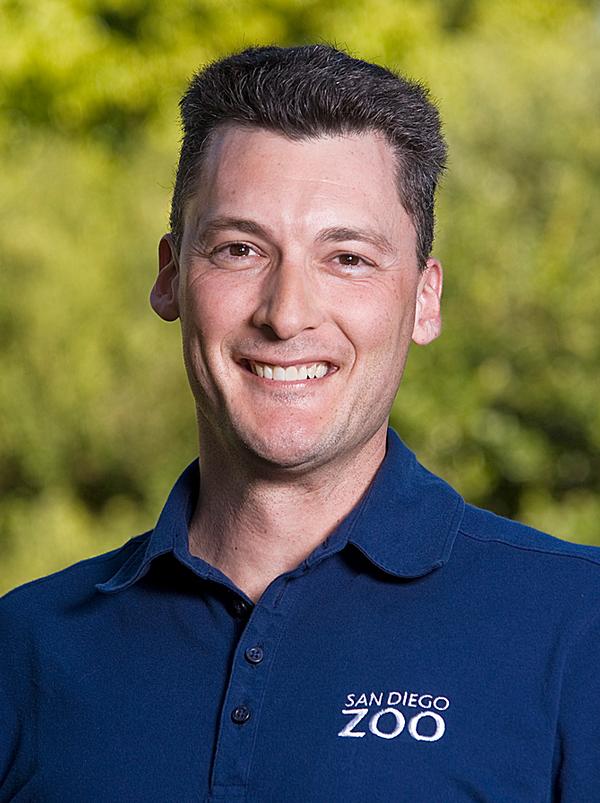
Rick Schwartz
Visitors are invited to lose themselves at San Diego Safari Park’s immersive exhibit of rare Sumatran tigers. A zoo ambassador tells all



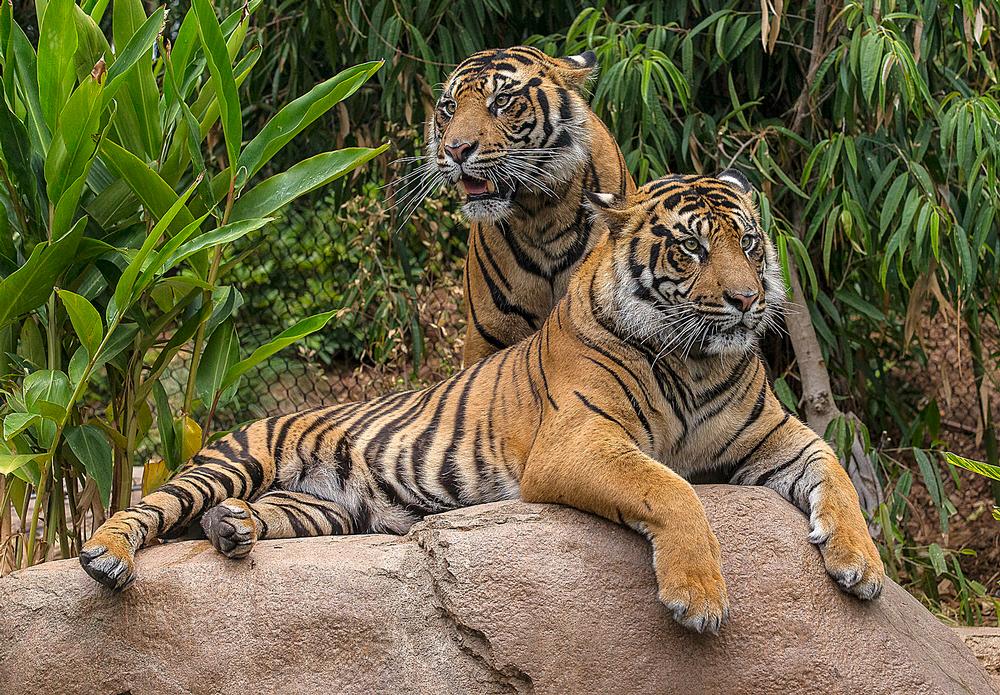
San Diego Zoo Safari Park has unveiled a new home for its Sumatran tigers. The winding trail brings visitors through forests, ponds and long grasses to see the majestic cats in an environment designed to feel as close to their natural Indonesian habitat as possible. We spoke to zookeeper Rick Schwartz following the Tiger Trail’s opening weekend. Schwartz, who is also an ambassador for San Diego Zoo Global, told us about the exhibit, the zoo’s conservation drives and the joy of zoo keeping.
Can you describe the new Tiger Trail to us?
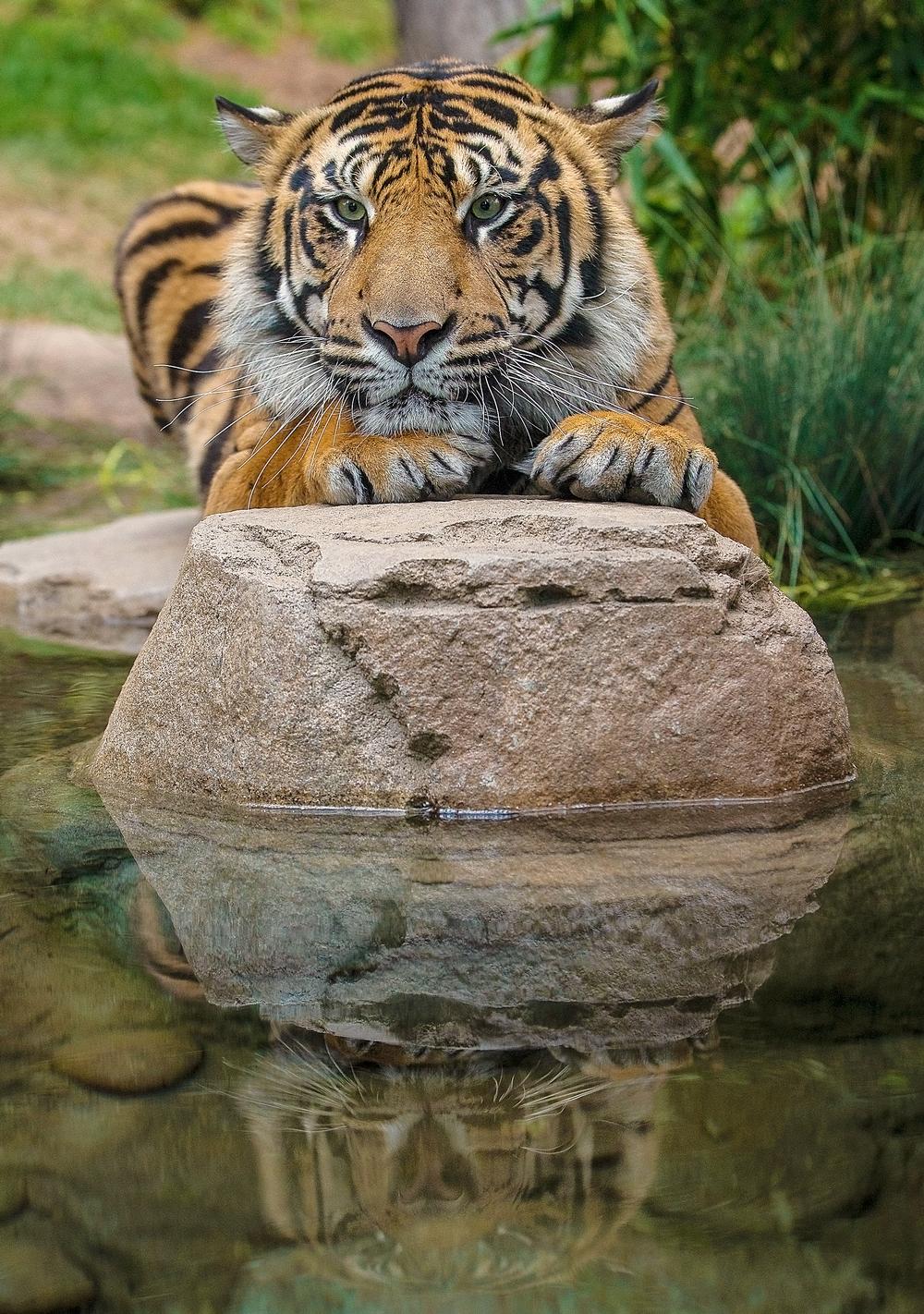
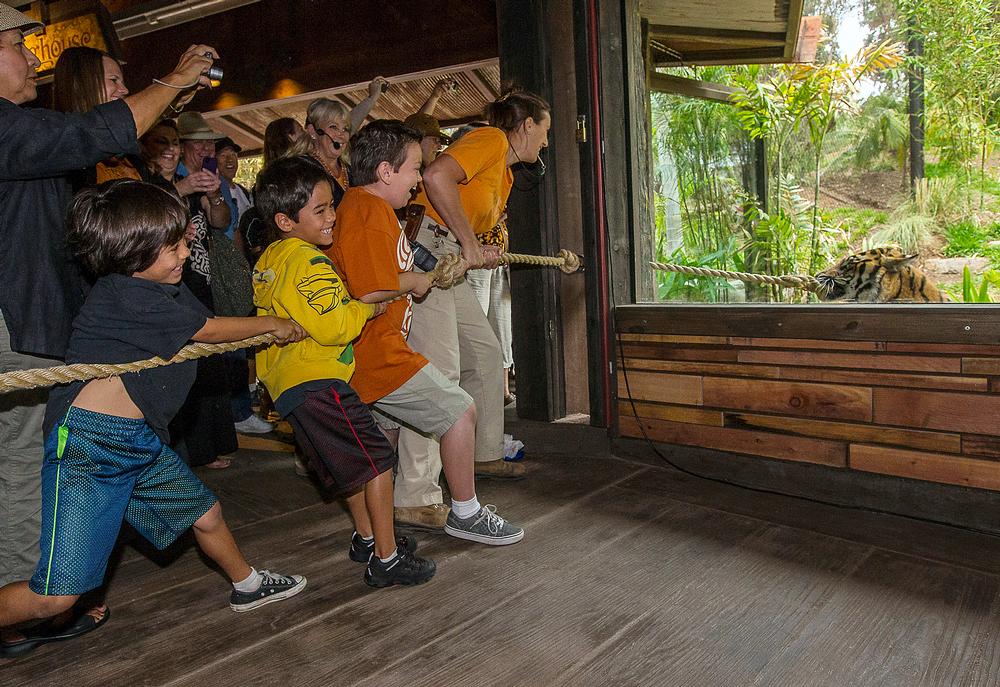
The safari park is very open. It’s a huge exhibit that has all these species roaming through it just like you’d see in Africa. So what really stands out about the Tiger Trail is that you’re suddenly immersed in the bamboo rainforests of Southeast Asia. You disappear in this forest and it’s remarkably different from the rest of the safari park experience. We’ve always had Sumatran tigers at the safari park, but the exhibit we had before was where you had to stand on the perimeter and look in. But now, in the newly opened Tiger Trail, the path winds and curves through the exhibit space and (although you are safe, of course!) your perspective is that you can see tigers on your left, you can see tigers on your right. There are also pools and ponds and streams – plenty of water features because, in fact, the tigers are one of the few cats that actually enjoy playing in water. We have already seen on the warmer days that the cats will actually go in and play in the water. That’s a real treat because it’s great for our guests to witness this natural behaviour that maybe your average person wouldn’t expect to see from a cat.
There’s also some Indonesian-style architecture on the trail, is that right?
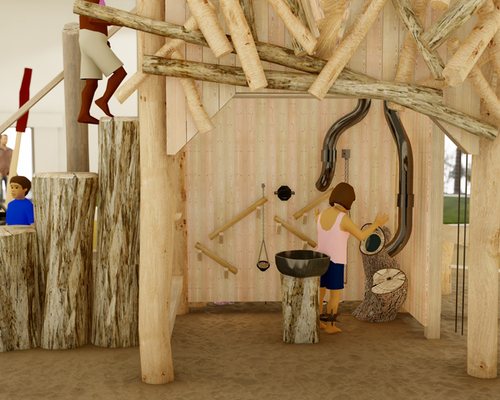
Yes, there is a traditional longhouse, which is a community meeting house like you’d see in Indonesia. We have many conservation efforts going on in Sumatra, so we have people coming and going all the time. They always bring back a lot of photographs and imagery and information about the architecture and everything else. The trail’s attention to detail is very vivid. It feels as though you’re in an isloated forest in Southeast Asia. The longhouse offers another view of the exhibit and the cats, and it has a lot of educational content too about the challenges the tigers face in the wild – such as habitat loss and poaching.
What do you hope visitors take away from walking the Tiger Trail?
The main idea behind it is to immerse our guests into the experience. We don’t want to hit them over the head with the educational side, but it’s there so we hope they’ll learn and be excited about tigers, and also have a better understanding of the challenges they face.
How large is the exhibit and how much did it cost?
The Tiger Trail is just over 5 acres [2 hectares], and it cost $19.5 million [£11.6m, €14.3m]. We’re very fortunate with our donor base; it was all paid for by donations. The Tull family put up $9 million [£5.4m, €6.6m] and asked our donors to match it. They did, and actually came up with a bit more. We have great community support here in San Diego and across the nation. Our donors see the efforts in the work that we do.
There are six tigers now. Do you have room for more?
Definitely. This is essentially a breeding facility. There are only about 400 Sumatran tigers left in the wild, and so our Species Survival programme and our efforts to end extinction are vital. Our goal is to work alongside other zoos that have Sumatrans. We pay very close attention to the blood line and genetics which allows us to match the proper cat to the proper breeding programme. Making a strong blood line for the future is a really important goal. By doing that, we can ensure that some day we’ll have a Sumatran tiger population in zoos that can sustain a population in the wild.
What other exhibits do you have at the safari park in San Diego?
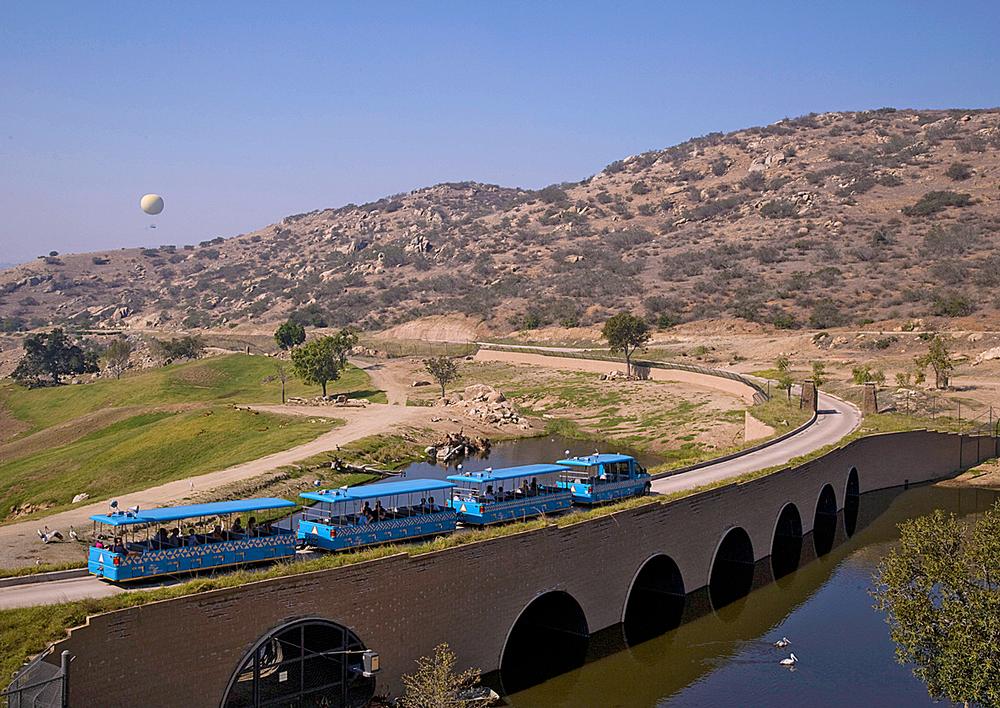
At the safari park, one of the main attractions is the Africa Tram, where you go out to these very large fields and it really does have that feel of being on safari. We have a lot of different safari experiences that you wouldn’t get in a normal zoo. San Diego Zoo is a more traditional zoo in the city. There are great attractions there, like the koalas, which is set up like the Tiger Trail in that when you go in you’re immersed in that Australian experience, with animals, and reptiles and plants from Australia. It’s about experience. It’s also true of the giant pandas, which are a huge attraction at the San Diego Zoo, in their bamboo forest, as though you were in a panda territory in China. We want people to enjoy and have fun, but also give them a little education so they walk away having learned.
Are the pandas the most popular animals at the zoo?
Yes, they are among the most popular with our visitors. Traditionally it’s elephants, big cats and apes, but one of the draws of the pandas is that only a few zoos have them. At the Institute for Conservation Research we have on-site scientists who are trying to build an understanding of panda conservation and breeding and what pandas are facing.
What have been San Diego Zoo Global’s biggest successes in conservation?
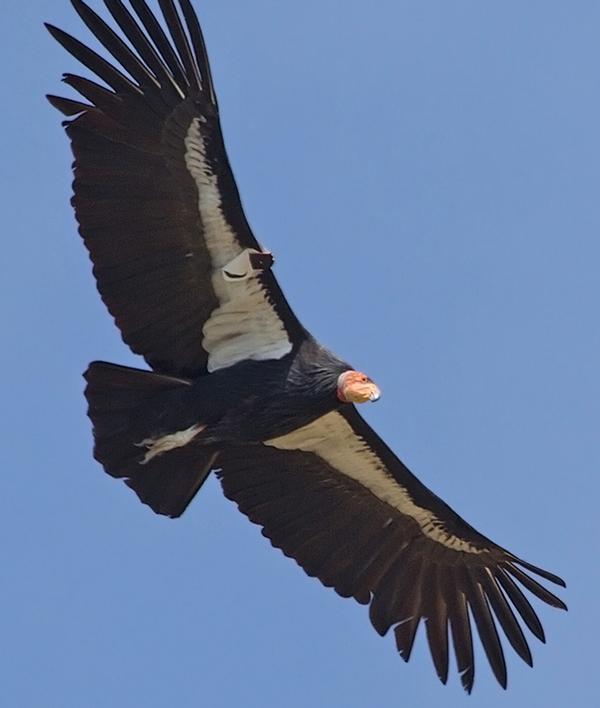
One of the most widely understood and widely publicised examples is the case of the California condor. I use it as an example not only because it’s a large magnificent bird, but it’s a story that holds true to many conservation efforts. In the mid-1980s, there were only 22 or 24 individual condors left. Out of an entire species, there were less than two dozen. San Diego Zoo brought those birds into the zoo environment to prevent losing them altogether. Now in 2014 there are almost 400 condors in the world, and about half of them are free in the wild.
What does your role entail?
My role as ambassador is great because I enjoy talking about what we do and our conservation efforts and I am passionate about animals and animal care. I work with animals here in San Diego, and I also get to travel the world speaking to press organisations, national TV shows, going to conservation sites, like Galapagos and Australia. I share that story with everyone.
What’s the best part of your job?
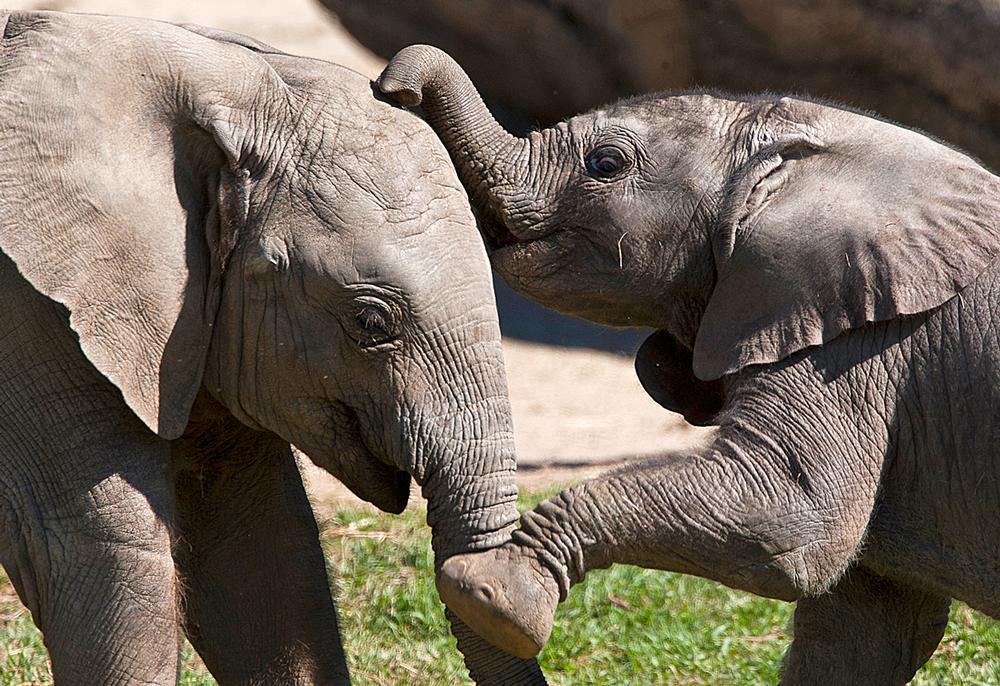
Occasionally, I get to just hang out with an animal that I’ve known since it was a baby. Those little moments arejust amazing gems of experience that you can’t get anywhere else or in any other job. And then, the other week I was in Africa tracking elephants and I can’t believe I got to do that. And then, when you have the opportunity to talk to a group of children, they are so locked in and so excited and they ask such great questions and that is really fulfilling too.
What else is happening?
Our centennial is in 2016, so we are currently planning how to best to celebrate. That’s the big buzz right now.
San Diego Zoo Global
San Diego Zoo Global is the non-profit organisation that oversees San Diego Zoo and San Diego Zoo Safari Park. The third entity of San Diego Zoo Global is the Institute for Conservation Research, which is based in San Diego and several other locations around the world.
San Diego Zoo Global was established as the Zoological Society of San Diego in 1916 by Dr Harry M Wegeforth, who felt there was a need for a zoo for the children of San Diego to enjoy. The name San Diego Zoo Global was decided on to reflect the operations of the organisation, which has a presence in 35 countries doing conservation work, and scientific study at the Institute of Conservation Research. San Diego Zoo Global runs breeding programmes and Species Survival plans, and works with other zoological societies around the globe. “Our aim is very simple, although it is a big undertaking: it’s to end extinction.” says zookeeper Schwartz.

















Designed to restore neglected land and renew the identity of Iraq’s capital city, Baghdad Sustainable Forests promises a new way of living surrounded by nature. Gensler’s Ian Mulcahay tells us why he thinks the project could become a model for the repair and enhancement of urban centres